![[object Object]](https://res.cloudinary.com/dlwdq84ig/image/upload/w_3840,q_auto,c_scale/x1qgcm5jcooqwptm0kbq)



Fishing Hook Size Guide
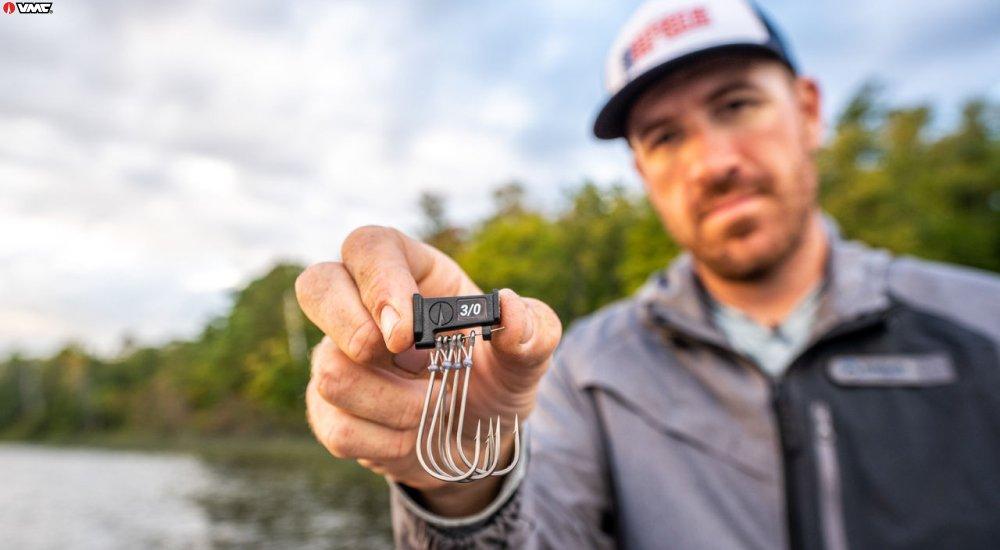
When preparing for the fishing season, don't overlook updating your fishing hooks. Whether browsing online or shopping in-store, the wide variety of different types of fishing hooks and sizes can make selecting the best one to add to your tackle box challenging. To help you make the right choice, our Fishing Experts break down how fishing hook sizes work, key factors to consider, and a few tips so you can have more successful days on the water.
Understanding Fishing Hook Sizes
When it comes to fishing hooks sizes, it's important to start with the basics. There are two main categories in hook sizing: the standard number system and the aught system.
Standard Number System (#)
This system applies to smaller hooks, commonly used for panfish, trout, and other smaller species, or when using smaller baits.
-
The smaller the number the larger the hook. For example, a #2 hook is larger than a #4 hook.
-
Sizes in this system range from #32 (the smallest) to #1 (the largest).
Aught System (__/0)
Once you pass size #1, the sizing system switches to the aught system, which is used for larger hooks designed for larger fish and baits. Within the aught system, you'll see the size described as 1/0, 2/0, and so on.
-
The larger the number, the larger the hook. For example, a 4/0 is bigger than a 3/0 hook.
-
This system ranges from 1/0 (the smallest) to 20/0 (the largest).
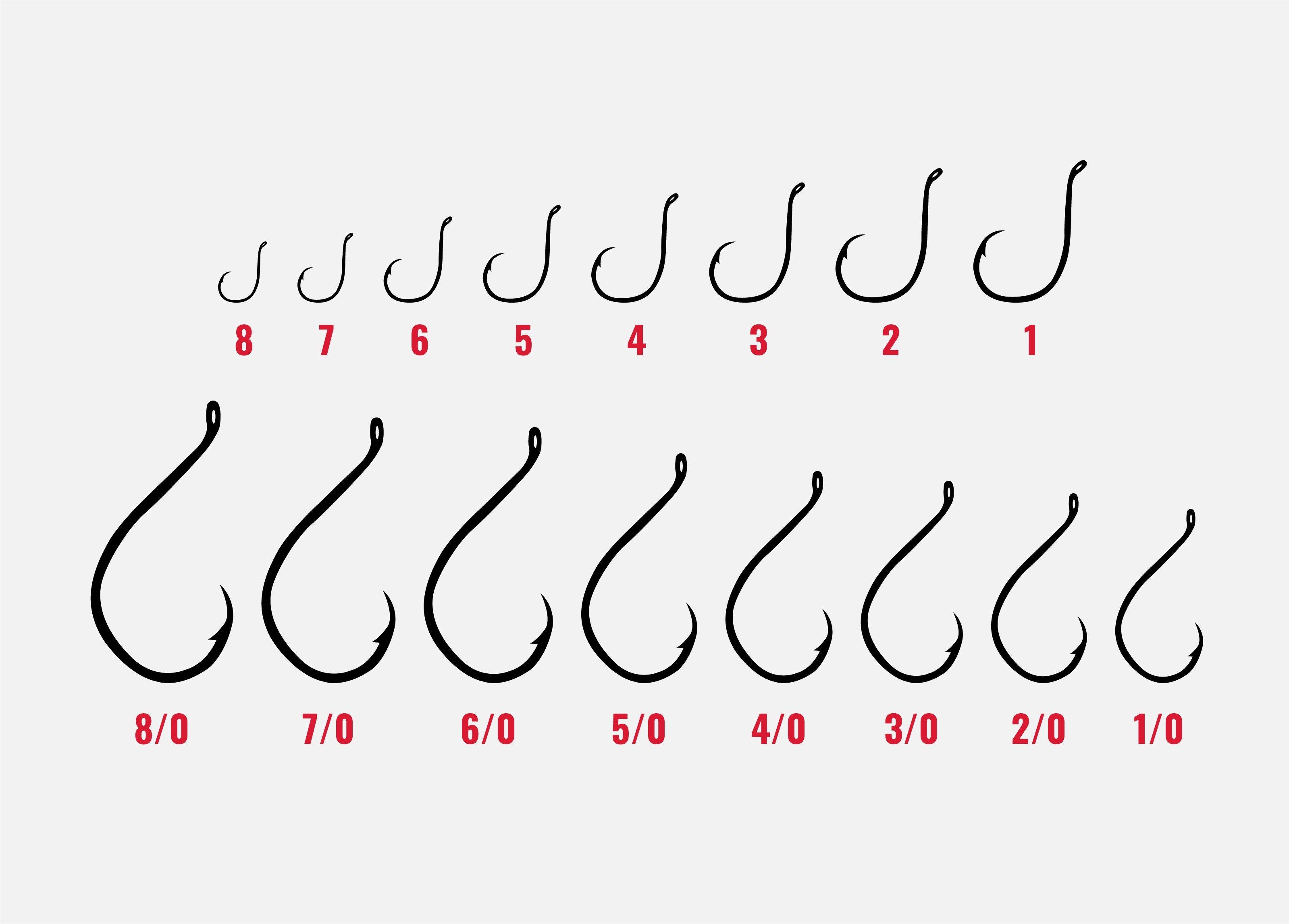
Fish Hook System Chart
System | Size Range at SCHEELS | What the #s Mean |
|---|---|---|
| Standard | #22 to #1 | The larger the # the smaller the hook. |
| Aught | 1/0 to 12/0 | The larger the # the bigger the hook. |
Understanding how these systems work—and where they overlap—is important to help you narrow down to the right hook size for your setup.
Considerations When Choosing a Hook Size
Selecting the right hook size comes down to a few factors—there's no one-size-fits-all rule. Our Fishing Experts ask customers about their target species, bait size, fishing style, and environment in order to recommend the most effective hook size and type.
1. Target Species
This is arguably the most important factor because the size and strength of the fish you're targeting determines the size of hook you need. Each species has different mouth sizes, meaning the hook's gap must be wide enough to properly hook the fish in the mouth.
-
Panfish like crappie and bluegill have small mouths, requiring smaller hooks (#10 to #6).
-
Large game fish like musky need much larger hooks (4/0 or larger).
2. Bait or Lure Size
The hook should always be proportional to the bait or lure you are using. The main goal is to maintain a natural presentation while still ensuring solid hooksets.
-
Live Bait: The hook should be large enough to hold the live bait securely without killing it or restricting its natural movement. It also needs to be small enough so the fish can easily take both the hook and the bait
-
Artificial Lures: For soft plastics, the hook's gap and shank length should match the lure's profile.
3. Fishing Presentation & Environment
Your fishing technique and environment also play a role in determining the right hook size. Here are a few Expert suggestions:
-
Finesse: When choosing techniques like Drop Shot, Wacky Rig, and others, we suggest using smaller, lighter hooks (#2 or #1) to keep bait movement natural.
-
Flipping and Pitching: If you're bass fishing in heavy cover, using larger, stronger hooks like 3/0 to 5/0 are ideal to punch through soft plastics and thick vegetation.
-
In weedy, rocky, or snag-heavy areas, a larger, sturdier hook can also reduce the chance of bending or damage.
-
Freshwater vs. Saltwater: Saltwater species are generally stronger and more aggressive, so saltwater hooks are larger and made from corrosion-resistant materials.
Fishing Hook Size Chart
This general hook size chart to use as a helpful guide when identifying which size range would be best for your target species. As noted above, there are several factors that go into choosing a hook size including the type of hook you use.
Species | Hook Size Range | Hook Size System |
|---|---|---|
| Bluegill, Crappie | #10 – #6 | Standard |
| Trout | #12 – #6 | Standard |
| Perch | #8 – #4 | Standard |
| Walleye | #4 – 1/0 | Standard to Aught |
| Bass (Largemouth/Smallmouth) | 1/0 – 5/0 | Aught |
| Catfish | 2/0 – 6/0 | Aught |
| Pike, Musky | 4/0 – 8/0 | Aught |
Expert Advice | Don't forget to practice your knot tying skills! Learn and master reliable knots like the uni knot or Palomar knot to make sure you don't miss a hookset!
By understanding hook sizing systems and considering key factors like species, bait, and presentation, you'll be able to make a confident decision when choosing the right fishing hook. Using the general fishing hooks size chart above is a great starting point, but don't be afraid to experiment. Sometimes even a small adjustment can make a difference. If you have additional questions or prepping for the water, stop by your local SCHEELS to speak with a Fishing Expert.