![[object Object]](https://res.cloudinary.com/dlwdq84ig/image/upload/w_3840,q_auto,c_scale/x1qgcm5jcooqwptm0kbq)



Wedge Bounce & Grind Explained
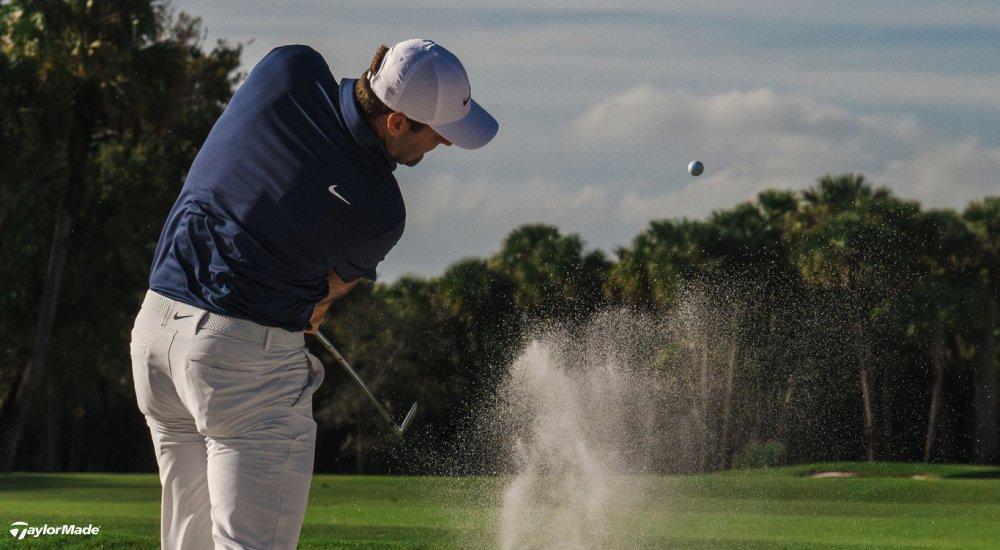
If you’re a more experienced golfer, paying attention to the bounce and grind of a wedge are important factors to consider. These features influence how your wedge interacts with the turf and sand, providing control over spin, trajectory, and shot consistency. Our Golf Experts offer a basic explanation of wedge bounce and grind so that you can choose the right types of wedges for your game.
What is Bounce on a Wedge?
Wedge bounce helps play a role in controlling and fine-tuning your shots, offering greater accuracy based on course conditions and your swing. Bounce refers to the angle that’s created between the ground and the sole of the wedge when the club is in a neutral position. This angle determines how much of the club’s sole interacts with the ground upon impact, directly influencing its ability to glide through sand or turf.
Types of Wedge Bounce
There are three different types of bounce—high, standard, and low.
-
Standard bounce (7-10 degrees) wedges are the most versatile and commonly used by golfers.
-
Low-bounce wedges (4-6 degrees) are great for harder turf surfaces or coarse sand, offering more precise shots.
-
High-bounce wedges (10+ degrees) are better suited for soft conditions or golfers who tend to hit down on the ball creating deep divots.
Wedge Bounce Chart
The chart below helps give you a general idea of which type of bounce works best for the conditions and playing style. To learn more about your swing style, schedule a custom fitting with our Golf Experts.
| Bounce Type | Bounce Angle | Course Conditions | Swing Style |
|---|---|---|---|
| Low Bounce | 4° – 6° | Firm turf and sand | Shallow swings |
| Standard Bounce | 7° – 10° | Versatile, most surfaces | Neutral swings |
| High Bounce | 10°+ | Thick rough | Steep swings |
What is Grind on a Wedge?
Wedge grind refers to the shaping of the sole, where manufacturers carve out specific areas to customize how the club interacts with the turf or sand. Each grind is often represented by a letter and tailored to specific conditions or swing styles.
Wedge Grind Chart
The following chart offers some guidelines about which grinds are best for different playing styles and scenarios. If you’re looking for more personalized guidance on picking the best grind for you, feel free to reach out to your local SCHEELS store to speak with a Golf Expert.
| Grind Type | Bounce Angle | Course Conditions | Swing Style |
|---|---|---|---|
| F Grind | Mid to High | All-Purpose | Neutral to Steep |
| S Grind | Mid | All-Purpose | Neutral; Sweeping |
| D Grind | High | Soft, Bunkers, Open Face Shots | Steeper; Players who open the face |
| K Grind | High | Soft, Bunkers, Forgiving | Steeper; Beginner |
| T Grind | Low | Firm, Tight Lies, Precision | Sweeping; Skilled players |
| M Grind | Mid | Medium to Firm, Versatile | Neutral; Players who manipulate the face |
Understanding wedge bounce and grind is one way to lower your scores and improve your short game. You can select the right wedge setup to improve accuracy, consistency, and control by considering your swing style, course conditions, and personal preferences. For a custom fit, schedule a golf fitting with one of our SCHEELS Master Fitters.