![[object Object]](https://res.cloudinary.com/dlwdq84ig/image/upload/w_3840,q_auto,c_scale/x1qgcm5jcooqwptm0kbq)



Crankbait vs. Jerkbait: What’s the Difference?
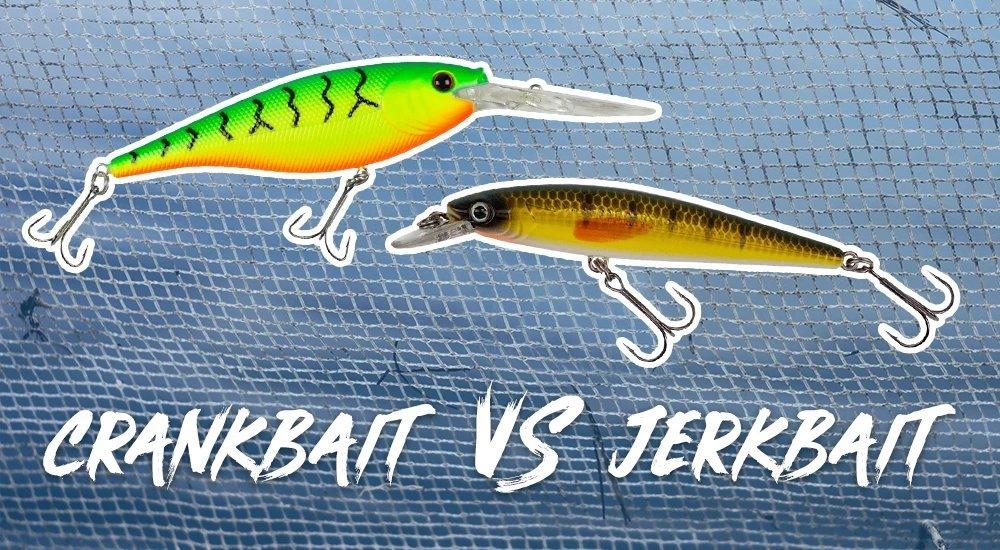
When it comes to fishing, choosing the right lure can make a significant difference in your success. Jerkbaits and crankbaits are two popular choices among anglers, but what sets them apart? There are a few key differences between jerkbaits and crankbaits, and our Experts are here to explain when and how to use each lure effectively.
What is a Jerkbait?
Jerkbaits are versatile lures that, like crankbaits, mimic injured baitfish, attracting predatory fish. These lures come in various sizes, shapes, and colors, but they typically present with a slim, minnow-like shape. Jerkbaits maintain a shallow depth or float on the surface. When retrieved, jerkbaits dart erratically, imitating the movements of wounded prey with rolling, twitching, or wiggling. However, what truly makes jerkbaits stand out is their ability to pause mid-retrieve. This pause mimics a dying fish, enticing nearby fish to strike.
Key Features of Jerkbaits:
-
Dart erratically when retrieved
-
Ability to suspend in the water
-
Jerkbait imitates injured baitfish
-
Pause mid-retrieve to mimic dying fish
What is a Crankbait?
One of the hallmarks of a crankbait is the shape of the lure body. Crankbaits tend to be rounder and often can be identified by their tear-drop shape. Unlike jerkbaits, crankbaits dive underwater at various depths and typically use vibration to attract nearby predators. These lures have a lip or bill that causes them to dive when retrieved. The lip design determines how deep the lure will dive, allowing you to target fish at specific depths. Crankbaits come in a variety of different diving depths—shallow, medium, and deep divers. Whether you're fishing medium-depth waters or deep lakes, there's a crankbait that suits your needs.
Key Features of Crankbaits:
-
Lip design determines diving depth
-
Typically have a rounder, tear-shaped body
-
Crankbaits dive underwater at various depths
-
Suited for fishing in shallow, medium-depth, or deep waters
When to Use Jerkbaits
Jerkbaits excel in several situations. First, they are highly effective in cold-water conditions when fish are less active. The slow, erratic movements of jerkbaits trigger reaction bites in lethargic fish. Second, jerkbaits shine when fish are feeding on injured baitfish because the lifelike action and pause of jerkbaits can fool even the most cautious predators. Lastly, jerkbaits are great for clear water conditions, where their realistic appearance and movement can make a significant impact.
-
Effective in cold-water conditions
-
Trigger reaction bites in lethargic fish
-
Fool predators feeding on injured baitfish
-
Ideal for clear water conditions
When to Use Crankbaits
Crankbaits, on the other hand, are perfect for covering large areas quickly. Their diving ability allows you to explore different depths, locating fish in various parts of the water column. Crankbaits are also excellent choices when fish are actively feeding and chasing fast-moving prey. Their aggressive action and vibrations can trigger predatory instincts, making crankbaits irresistible to hungry fish.
-
Cover large areas quickly
-
Explore different depths
-
Ideal for locating fish in various parts of the water column
-
Effective when fish are actively feeding and chasing prey
While both jerkbaits and crankbaits are effective fishing lures, they have distinct differences that make them suitable for specific situations. Jerkbaits excel at fooling lethargic fish with their lifelike action and pause. On the other hand, crankbaits offer versatility, allowing you to cover large areas quickly and locate fish at different depths. By understanding the differences between these two lures, you can make informed decisions and increase your chances of a successful fishing trip. If you have additional questions about fishing lures, contact your local SCHEELS to speak with an Expert.