



Parts of a Running Shoe
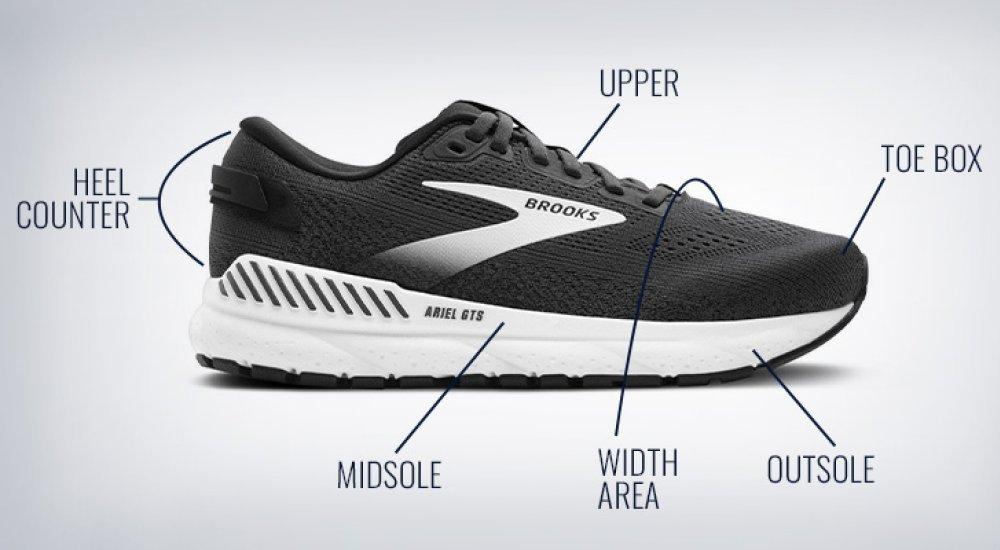
Whether you’re a seasoned runner training for your next PR or just starting your fitness journey, understanding the parts of a running shoe can help you choose the right pair for your foot type and running style. Running shoes are very technical and each part—from the outsole to the upper—affects comfort, stability, and performance. Our Footwear Experts explain the different parts of a running shoe and their function so you can find the right pair!
Main Parts of a Running Shoe
Most running shoes are made up of five essential parts: the upper, outsole, midsole, toe box, and heel counter. Together, these provide protection, traction, and cushioning for every run.
1. Upper
The upper is the entire top portion of the shoe that sits above the sole. While it contributes to the shoe’s style, the upper also protects your foot and keeps it securely in place. Most uppers use engineered mesh, knit materials, or overlays to offer a balance of breathability, lightweight feel, and structure.
Features of the Upper:
-
Ventilation
-
Reflective elements
-
Overlays to offer structure
-
Lacing holes to adjust the fit
-
Waterproof membrane (some styles)
2. Outsole
The outsole is the layer of rubber on the bottom of your running shoe. It provides grip, traction, and durability against the ground.
-
Road running shoes often feature smoother rubber for efficient traction on pavement.
-
Trail running shoes use grippier rubber compounds and deeper lugs for better traction on uneven or muddy terrain.
Expert Tip | If you notice worn tread or slick spots, it’s a sign your outsole is breaking down—and your shoes may need replacing.
3. Midsole
Sitting just above the outsole, the midsole is the foam layer that connects the upper to the outsole. It provides cushioning, energy return, and shock absorption during each stride.
Shoes with a thicker midsole offer more comfort for long runs or recovery days, while thinner midsoles deliver a closer-to-ground, minimal feel. Advances in running shoe technology—like lightweight super foams and carbon plate technology—have made midsoles more responsive without adding bulk.
4. Toe Box
The toe box is the front part of your shoe where your toes rest. It gives your toes room to move and spread naturally with each step.
- Wide toe boxes help prevent blisters and black toenails by reducing friction. Brands like HOKA and Altra are great choices if you’re looking for a wide toe box running shoe.
Expert Tip | When trying on shoes, ensure you have about a thumbnail’s length of space between your longest toe and the front of the shoe for optimal fit and comfort.
5. Heel Counter & Heel Drop
At the back of the shoe, the heel counter is a supportive structure—often made from firm or molded materials—that wraps around your heel to improve stability. The heel-to-toe drop (or simply heel drop) measures the height difference between the heel and the forefoot:
-
Higher drops (8–12mm): Relieve pressure on calves and Achilles tendons.
-
Lower drops (0–6mm): Promote a more natural stride and forefoot landing.
Your ideal heel drop often depends on your running style, comfort preference, and any injury history.
Understanding the parts of a running shoe helps you make more confident decisions when choosing your next pair. For personalized recommendations, visit your local SCHEELS to speak with a Footwear Expert.