


How to Choose a Hunting Rangefinder
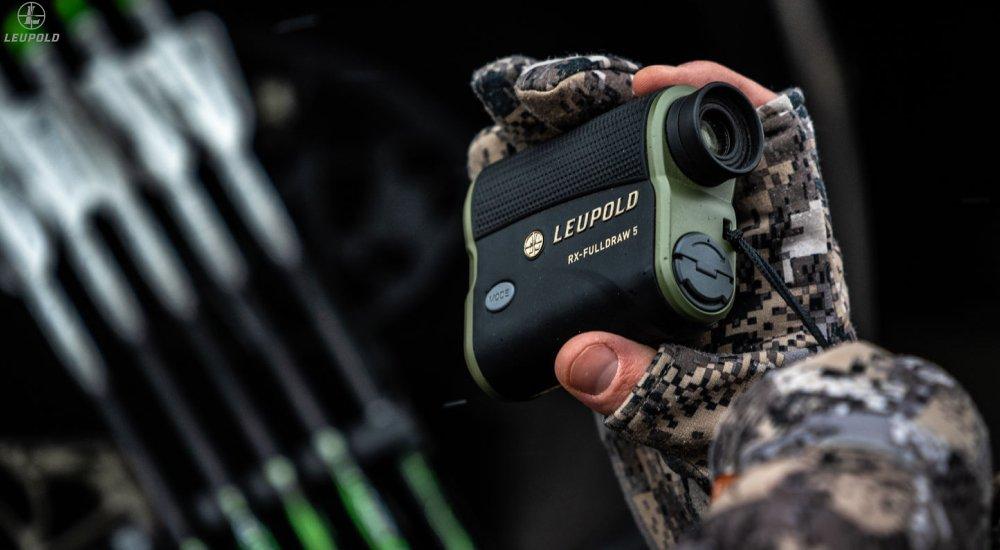
When you’re bow hunting, rifle hunting, or shooting targets, you need to know the distance between you and your target. It’s important to choose the right hunting rangefinder for a successful day in the field. Our Optics Experts share the most important features to consider when selecting your next rangefinder for hunting including how rangefinders work, features to consider, and modes.
What Is a Rangefinder?
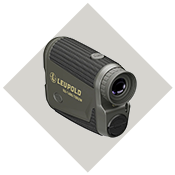
A rangefinder is a compact, handheld optic that is designed to measure the distance between you and the intended target. This is important for hunters to make accurate shots even at longer ranges or from challenging angles.
How Do Rangefinders Work?
Rangefinders use a laser that emits a pulse of infrared light when you push the button. The light bounces off the object and returns to the rangefinder lenses. The rangefinder measures the time it takes the laser to return, then calculates the distance to the target and displays it alongside the aiming reticle.
Hunting Rangefinder Features
When looking for a hunting rangefinder, there are several features to take into consideration—all depending on your situation.
Maximum Distance
This is the most important feature to consider when choosing a hunting rangefinder. The number associated with a rangefinder is the maximum distance of a reflective target. Meaning, that number is the peak distance it can measure under ideal conditions. Since most hunters are ranging non-reflective targets, your rangefinder will typically perform at shorter distances.
For example, if you're ranging in dense woods, you may consider a rangefinder with a maximum distance of 600 yards, but for open fields or long-range shooting, you'll want to look for longer distances of 2,000 yards or more.
Magnification
Magnification indicates how zoomed-in the image will be. If the rangefinder has a magnification of 6x, the image will appear six times larger than it does with the naked eye. Magnifying far-away objects makes it easier to put the reticle of the rangefinder exactly on your target, giving you the most accurate distance information. However, a higher magnification power also makes a darker image and has a smaller field of view.
For most users, a 6x rangefinder provides the best balance between zoom and image clarity.
Size & Weight
If you're hunting in the backcountry, you have a lot of gear to pack. Making sure your hunting rangefinder is lightweight and compact is a top priority for mobile hunters. You also want to make sure that your rangefinder is comfortable to hold in your hands.
Waterproof and Fog Proof
Unpredictable conditions are part of hunting, so you want to consider waterproof and fog proof construction for durability and performance.
Battery Life
Look to see whether the rangefinder uses a rechargeable battery or standard batteries and consider how long they last under normal use.
Display Quality
Look for models with illuminated displays for low light conditions or displays that are easy to see in bright sunlight.
Hunting Rangefinder Modes
Several modern rangefinders offer various modes that change how the rangefinder measures distance. While not a necessity, these extra modes and features can give you some extra information to improve your shot.
Scan Mode
The rangefinder will continuously measure the distance between you and your target as long as you hold the button. This is most useful when ranging a moving target, especially at longer ranges.
Last Mode
With this mode, your rangefinder will ignore closer objects and put up the farthest target in view. This is helpful if there's brush between you and your target.
Angle Compensation
This mode gives you the distance to your target but also takes into consideration the incline or decline to your target. This can help you compensate for the drop of your bullet and adjust your aim accordingly.
Ballistic Mode
Some hunting rangefinders feature this mode to help hunters estimate bullet drop over distance.
Bow Mode
If you're a bowhunter, finding a rangefinder with bow mode may be an important feature as it factors in angles and distance to provide accurate horizontal distances for precise shot placement.
Adding a hunting rangefinder to your optics lineup is important to know the exact distance to your target so that you can have success during the hunting season. From trusted brands like Vortex, Leupold, SIG SAUER, and more If you have any questions about which rangefinder is best for your needs, visit or contact your local SCHEELS and talk to one of our Optics Experts!