![[object Object]](https://res.cloudinary.com/dlwdq84ig/image/upload/w_3840,q_auto,c_scale/x1qgcm5jcooqwptm0kbq)



How to Choose a Spotting Scope
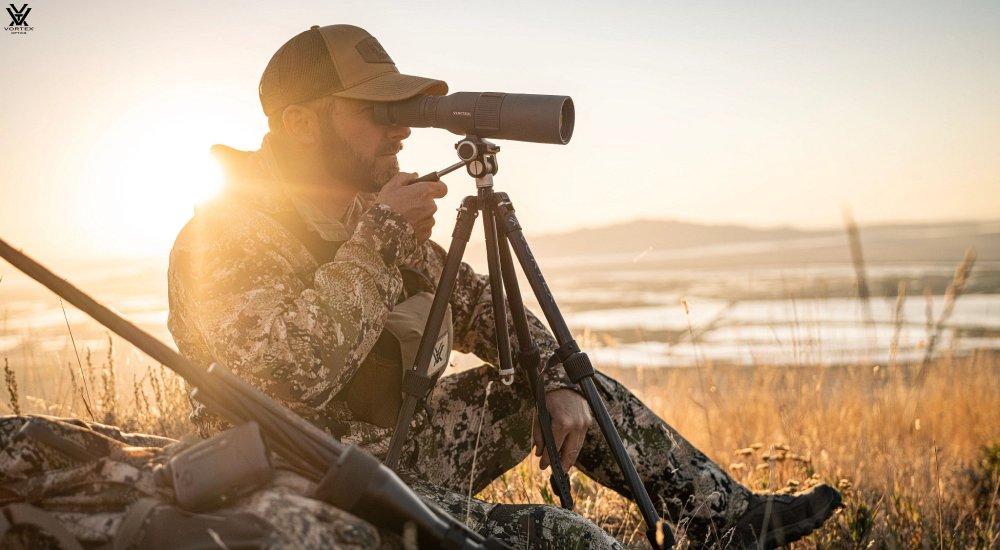
Whether scanning vast terrains for game, identifying targets from a distance, or preparing for a long-range shot, choosing the right spotting scope can make all the difference during long-range observations. With higher magnification than binoculars and the comfort of being able to glass for extended periods, spotting scopes are essential tools for those seeking accuracy and efficiency at long distances. Understanding the key factors that impact performance can help you select the perfect scope for your application—hunting, target shooting, or birding.
What Is a Spotting Scope?
A spotting scope is a compact, high-powered telescope designed for long-range observations. With the high magnification levels, it allows users—especially hunters—to observe distant targets in clear detail, aiding in tracking game and making informed decisions. Spotting scopes are portable and often used with tripods for stability.
1. Understand the Parts of Spotting Scope
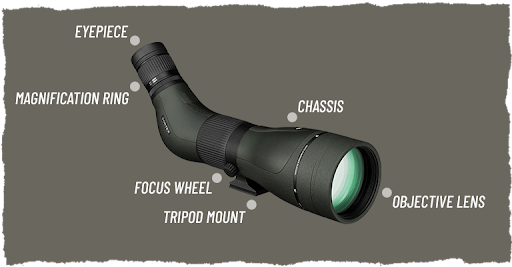
It’s important to get a basic understanding of the parts of a spotting scope so that you understand how it functions and what features you prioritize.
-
Eyepiece: This is the lens that’s at the rear of the scope (closest to your eye). This is often adjustable to provide the best eye relief.
-
Objective Lens: This is the lens that’s at the front of the scope (closest to the target). It gathers light and focuses it to create a clear image.
-
Magnification Ring: This allows the user to adjust the magnification level for closer or broader views, enhancing versatility in observation.
-
Focus Wheel: This control allows users to adjust the clarity of the image by changing the distance between the objective lens and the eyepiece. It helps in fine-tuning the view for sharpness.
-
Rotating Tripod Ring: This feature allows the user to easily position the spotting scope for comfortable viewing angles when mounted on a tripod.
-
Sunshade: An extendable cover that helps reduce glare and improve image clarity by blocking excess sunlight and protecting the objective lens from rain and debris.
-
Chassis: The main body of the spotting scope that provides structural integrity and protects the internal components. It is often made of durable materials and may be covered in rubber for added protection and grip.
2. Select the Type of Spotting Scope
There are two common types of spotting scopes: angled and straight. Knowing which type of spotting scope you prefer to use is the first step in finding the right one for your application.
-
Angled spotting scopes are easy to use from the side, more comfortable for upward glassing, and simple to share between hunters.
-
Straight spotting scopes take up less space in your pack, make finding the target easier, and are generally easier to glass from a vehicle.
3. Understand the Numbers on a Spotting Scope
Just like when choosing a rifle scope, it’s important to pay attention to the numbers describing the spotting scope, such as 20-60x85 or 16-48x65. These numbers describe the magnification range and objective lens diameter, both influence the spotting scope’s performance.
Spotting Scope Magnification
The first set of numbers describes the magnification range, or how much the scope can zoom in on a target. For example, the Vortex Diamondback HD 20-60x85, the “20-60x” means this scope can zoom from 20x to 60x magnification. The higher the magnification, the more detail you’ll see*.
It’s important to match the magnification range to your application:
-
20x-30x magnification range is ideal for viewing and scanning landscapes.
-
40-60x magnification range is ideal for detailed views at greater distances, like spotting game or reading target markers.
* Remember that using extreme zoom levels can reduce image brightness and stability.
Spotting Scope Objective Lens Diameter
The number after the “x” on a scope indicates the objective lens diameter in millimeters. For example, in a 20–60x85 scope, the objective lens diameter of 85mm. A larger objective lens allows more light to enter the scope, resulting in a brighter image.
4. Glass Quality & Lens Coatings
Another important feature when choosing a spotting scope is the glass quality and lens coatings. Lens coatings significantly impact the quality of the image you see. Spotting scopes come with various lens coatings that reduce glare, improve light transmission, and enhance image clarity. The quality of glass and coatings will also impact the price point for the scope.
5. Selecting Your Focus Adjustment
Every spotting scope has a focus adjustment so you can fine-tune the image for optimal clarity, but each style works a little differently. This feature is up to personal preference.
-
Single-focus knobs have one dial to adjust the focus. These are the most common type of focus knob and offer precise focus. However, they take a little longer to dial-in than other focus knob styles.
-
Double-focus knobs have two knobs—one for coarse focus and one for fine focus. This style makes it easy to make both large adjustments and more precise focus adjustments.
-
Helical focusers have a ring around the scope’s body. To adjust the focus, you rotate the ring clockwise or counterclockwise. They are great for making adjustments quickly and are especially helpful when observing objects that change distances.
Whether you’re scouting in the backcountry or observing nature, having a spotting scope suited to your needs will make your experience much more enjoyable. If you have any questions about choosing the best spotting scope for you, stop by your local SCHEELS and see one of our Optics Experts.