![[object Object]](https://res.cloudinary.com/dlwdq84ig/image/upload/w_3840,q_auto,c_scale/x1qgcm5jcooqwptm0kbq)



A Complete Guide to Choosing a Baitcaster Reel
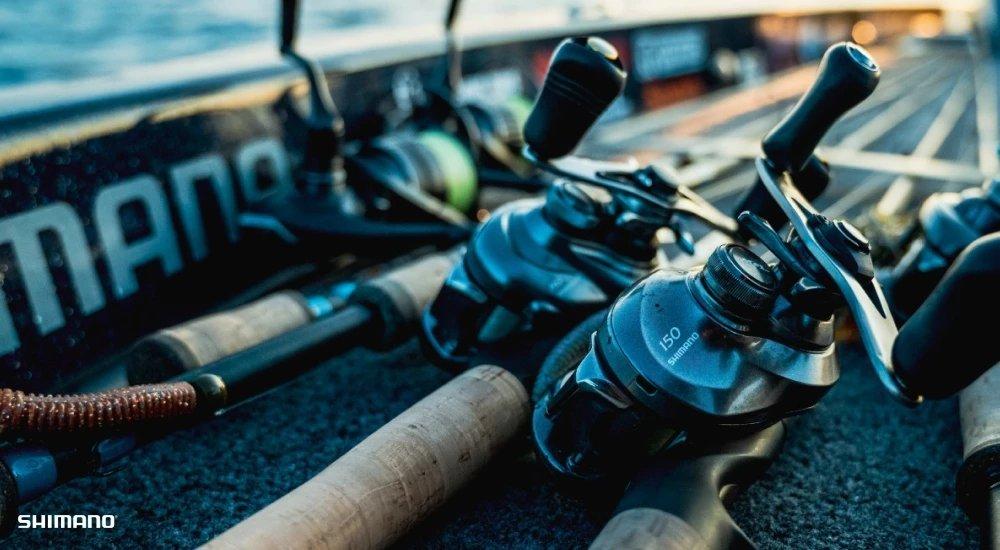
A baitcaster reel is a top choice for anglers needing accuracy, power, and distance when targeting larger species like bass and pike, navigating vegetation, or using heavier lines and lures. To help you find the perfect baitcaster reel for your fishing setup, our Fishing Experts cover everything you need to know from the essential parts of a baitcaster to the different types and key features.
What Is a Baitcaster Reel?
A baitcaster reel is a type of fishing reel mounted to on top of the rod, specifically designed to enhance accuracy and handle heavier lines and lures. These features of a baitcaster reel make it a preferred choice for anglers targeting larger species.
Benefits of Using a Baitcaster Reel
Baitcasting reels have many benefits for anglers including the following:
-
More control when casting and retrieving
-
Increased accuracy and distance
-
Ability to use heavier lines and lures
-
Greater line sensitivity for detecting strikes
Disadvantages of Using a Baitcaster Reel
Although there are plenty of benefits to using a baitcaster reel, anglers should consider the disadvantages too:
-
Steeper learning curve making it harder for beginner anglers to master
-
More expensive compared to spinning reels
-
More maintenance required because of the additional components
Parts of a Baitcaster Reel
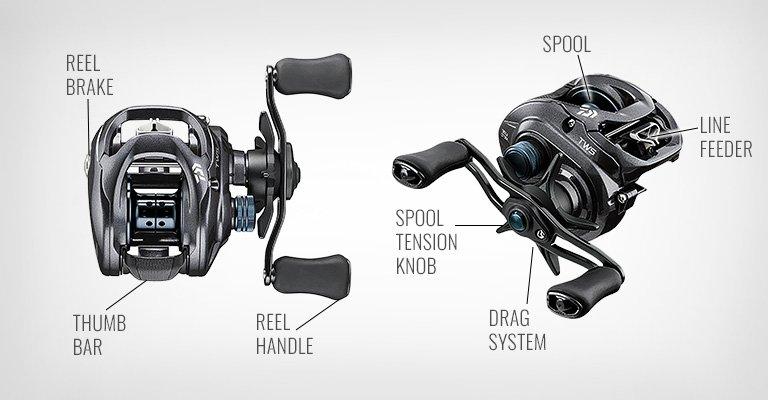
When purchasing a baitcasting reel, it's important to familiarize yourself with its components. Our Fishing Experts explain each part of the reel and its function:
-
Reel Handle: This part is used to wind the line back onto the spool.
-
Spool: This is what the line wraps around.
-
Spool Tension Knob: This allows you to fine-tune the spool rotation speed influencing how fast or slow the line will release from the spool.
-
Brake System: This helps reduce backlash by slowing the spool’s speed. This isn’t on every baitcaster but most have this feature.
-
Reel Seat: This is where the reel attaches to the rod.
-
Line Feeder: This evenly distributes the line on the spool when retrieving.
-
Drag System: This part adds tension to the reel when a fish is hooked.
-
Thumb Bar: This is what engages the reel and allows line to freely spool. To reengage, you’ll simply turn the handle and hear the click.
Types of Baitcaster Reels
Baitcaster reels come in two main types: low-profile and round. When choosing a baitcaster reel, it’s important to know where you’ll be fishing and what species you plan on targeting. Our Fishing Experts offer a quick comparison:
Low-Profile Reels
This is the most common type of baitcasting reel you’ll see fishing because they’re great for bass and walleye. Low-profile reels have a smaller frame and handle, making them much more comfortable to cast all day long. They also feature several adjustable settings including spool tension and the amount of slack in the line.
Round Reels
Round reels are larger and more traditional in design, making them a great option for surfcasting or reeling in larger species. With their size, they are able to hold more line making them a good option for trolling. They also allow you to cast heavier baits and lures farther and are best used for saltwater fishing or reeling in pike or muskie.
Baitcaster Reel Gear Ratio
Gear ratios help tell anglers the speed at which the spool rotates in relation to the handle. A gear ratio is noted with numbers. The first number indicates how many times the spool rotates, and the second number represents the number of times you turn the handle. For example, a baitcaster that has a 6.4:1 gear ratio will have the spool spin 6.4 times with every turn of the handle. Different gear ratios are best suited for different types of fishing and species.
-
Low Gear Ratio: Picking a low gear ratio is great for trolling or casting for larger species because the bait stays in the strike zone longer. You’ll want to look for ratios between 5.1:1 through 5.4:1. These are ideal when using crankbaits or hard-pulling lures while deep-sea fishing or fishing for pike and muskie.
-
Medium Gear Ratio: This gear ratio is a great choice for those who haven’t used a baitcasting reel before because they are versatile enough for a range of applications. You’ll want to look for ratios between 6.1:1 through 6.4:1.
-
Fast Gear Ratio: This is a popular choice for bass or muskie anglers. These are noted with a gear ratio of 7.1:1 or higher. The advantage of a fast gear ratio is that you’re able to retrieve and cast more quickly allowing you a greater number of casts throughout the day leading to more opportunities to reel in a catch.
Comparing Baitcaster Gear Ratio Chart
Please note that this is a general chart to give a better idea of which gear ratio would would bet for your fishing technique. If you have additional questions about gear ratio, stop into your local SCHEELS to speak with a Fishing Expert
| Gear Ratio | Speed | Best For | Lure Types |
|---|---|---|---|
| 5.1:1 to 5.4:1 | Slow | Trolling, deep-sea fishing | Deep crankbaits and spinnerbaits |
| 6.1:1 to 6.4:1 | Medium | Versatile; ideal for beginners or freshwater fishing | Mid-depth crankbaits or shallow spinnerbaits |
| 7.1:1 or higher | Fast | Bass fishing, muskie, or techniques requiring fast casting | Topwater, jerkbaits |
Now that you know the ins and outs of baitcasting reels, you’re ready to find the best one for your species and application. With top brands like Abu Garcia, Daiwa, Lew’s, and more, you’ll find the best baitcasting reel with our selection. If you have any additional questions about using a baitcaster reel or how to pair with the right baitcasting rod, stop into your local SCHEELS to speak with a Fishing Expert!