![[object Object]](https://res.cloudinary.com/dlwdq84ig/image/upload/w_3840,q_auto,c_scale/x1qgcm5jcooqwptm0kbq)



A Guide to the Different Types of Cleats
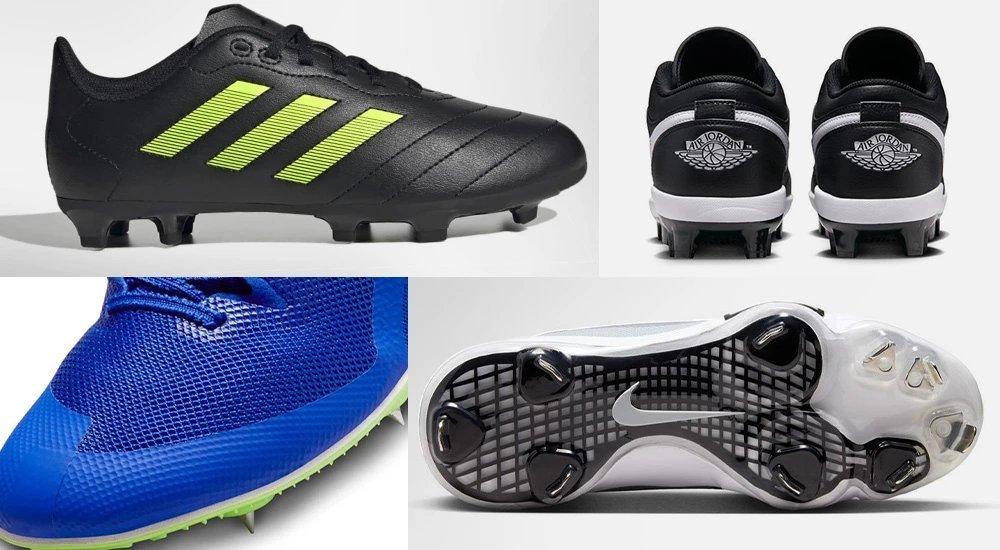
When it comes to sports, having the right gear is essential to performance, and one crucial piece of equipment for many athletes is a properly fitting pair of cleats. Whether you’re a player or parent prepping for the upcoming season, navigating the world of sports cleats doesn’t have to be hard. Our Footwear Experts guide you through the different types of cleats and how each type is optimized for their sport.
What Are Cleats?
Sports cleats are specialized athletic shoes designed with studs or spikes on the outsole to provide traction, stability, and support. They help athletes make quick movements, run efficiently, and stay safe on various surfaces like grass, turf, and dirt.
Different sports require different types of cleats optimized for their unique demands. Understanding cleat features ensures you choose the right pair for performance and injury prevention.



Key Features of Cleats
There are three key features that vary from sport to sport to meet the athletes’ needs. Our Footwear Experts highlight each so you know what to look for when buying a pair of cleats this season.
1. Cleat Material
The studs on the cleat's outsole are typically classified as molded or metal:
-
Molded: This type of cleat can be made from rubber or TPU (thermoplastic polyurethane). These are flexible, lightweight, and can be worn on a range of surfaces. They are popular in sports like soccer, lacrosse, and football.
-
Metal: Sports like softball and baseball feature studs made from metal for better grip on both dirt and grass surfaces. Since safety is a concern with metal cleats, there aren’t as many options to choose from.
Expert Tip | Did you know that some leagues have regulations about what type of cleat material you can wear during games? Make sure to check all the rules and regulations before buying your pair!
2. Stud Shape, Length & Placement
Another feature of cleats that is different depending on the sport is the shape, length, and placement of the studs. These factors all influence how the cleat will perform on different surfaces.
-
Longer studs offer better traction in wet or muddy conditions.
-
Shorter studs are best for dry, hard surfaces like turf.
3. Cleat Cut
There are three different cuts for the upper: low, mid, and high. Many sports offer a few different cuts to accommodate different positions and player preferences.
-
Low-cut: The upper stops below the ankle to provide plenty of ankle mobility. This cut is designed for speed and agility.
-
Mid-cut: The upper hits at or slightly above the ankle to provide more support than low-cut cleats yet still allows for adequate mobility.
-
High-cut: The upper stop above the ankle to provide maximum ankle support and protection.
Types of Cleats by Sport
So many parents ask if a single pair of cleats can be used to play multiple sports. Our Footwear Experts highlight the distinctive features of each type of cleat to emphasize the importance of choosing the right cleat for your specific sport.
Expert Tip | All cleats should fit snugly around the foot and ankle to provide adequate support for lateral movements. Cleats are designed to stretch slightly when worn and played in, but should ultimately be close-fitting.
| Sport | Cleat Material | Cut Options | Ideal Surfaces | Find Your Cleat |
|---|---|---|---|---|
| Football | Molded | Low, Mid, High | Grass, Turf | Shop Football Cleats |
| Soccer | Molded | Low, Mid | Grass (FG), Turf (MG) | Shop Soccer Cleats |
| Baseball | Molded or Metal | Low, Mid | Dirt, Grass | Shop Baseball Cleats |
| Softball | Molded or Metal | Low, Mid | Dirt, Grass | Shop Softball Cleats |
| Lacrosse | Molded | Low, Mid | Grass, Synthetic Turf | Shop Lacrosse Cleats |
| Track | Molded/Spikes | Low | Track Surfaces | Shop Track Spikes |
Football Cleats
Football cleats focus on support, stability, and traction. Here are the key highlights:
-
Made from synthetic leather and engineered textiles for durability
-
Feature molded studs to provide traction and grip
-
Available in a variety of cuts to provide the right stability depending on playing position; for instance, linemen require more stability than quarterbacks.
Featured Expert Content:
Soccer Cleats
Soccer cleats are designed for agility, speed, and ball control. Here are the key highlights:
-
Made from lightweight, breathable materials for comfort during fast-paced play
-
Feature molded studs designed for optimal traction on grass or turf. You’ll notice them described as Firm Ground (FG) or Multi-Ground (MG) depending on the ideal surface.
-
Mostly low-cut uppers for maximum mobility, with some mid-cut options for added ankle support
Featured Expert Advice:
Baseball Cleats
Baseball cleats focus on traction, durability, and support on dirt and grass surfaces. Here are the key highlights:
-
Made from synthetic leather for structure and durability
-
Feature molded or metal studs to provide reliable grip on dirt and grass
-
Available in low-cut or mid-cut uppers depending on player preference
Featured Expert Advice:
Softball Cleats
Softball cleats focus on traction, support, and durability for female athletes. Here are the key highlights:
-
Made from durable synthetic materials
-
Feature molded or metal studs for reliable grip on dirt and grass
-
Available in low-cut or mid-cut uppers to suit player preference and position
Featured Expert Advice:
Lacrosse Cleats
Lacrosse cleats focus on speed, agility, and stability for the sport’s fast-paced, multi-directional play. Here are the key highlights:
-
Made from lightweight, durable materials to support quick pivots and lateral movement
-
Feature slightly elongated soles and specialized stud patterns for traction on grass and synthetic turf
-
Mostly low-cut for mobility, with some options providing additional ankle support
Track Spikes
Track spikes focus on speed, traction, and event-specific performance for track and field athletes. Here are the key highlights:
-
Made from lightweight materials to maximize speed and comfort
-
Feature specialized spikes and stud patterns for optimal grip on track surfaces
-
Come in styles tailored to different events, including sprints, middle-distance, long-distance, jumps, and throws
How to Choose the Right Cleats
-
Which sport are you purchasing cleats for? Our Footwear Experts strongly recommend buying a pair of cleats specific to that sport. Some molded cleats can work across multiple sports, especially in youth leagues, but it’s best to wear sport-specific cleats.
-
Consider the playing surface: Make sure that your cleats pair with the surface you’ll be playing on, especially if you're looking for a pair of soccer cleats.
-
Pick the right cut: The cut of your cleat’s upper can be selected based on the position you play—low cut for agility while high cut for support.
-
Check league rules: Make sure your cleats comply with league regulations.
-
Proper fit: Cleat should fit snug but not too restrictive. They will stretch slightly throughout the season.
Understanding the different types of cleats, their features, and how they are tailored to specific sports and playing conditions can help players and parents make the right choice when prepping for the season. If you have additional questions about which type of cleat you should get for the upcoming season, stop by your local SCHEELS to speak with a Footwear Expert!