



6 Expert-Approved Walleye Setups
Open water walleye fishing requires adapting your setup based on water depth, fish activity, structure, and seasonal conditions. From finesse jig-and-minnow presentations to aggressive crankbait trolling patterns, each technique helps anglers target walleyes in different situations. In this guide, SCHEELS Fishing Expert, Tyler, breaks down six proven open water walleye setups that help consistently put more fish in the boat throughout the season.
When to Use Each Walleye Setup
You never know the conditions you’ll be fishing. Using the chart below will give help you easily compare each setup and provide you with a general understanding of when to use each.
| Technique | Best Season | Best Conditions |
|---|---|---|
| Jig & Minnow | Spring, Fall | Cold fronts, windy conditions, finicky fish, vertical presentations |
| Jig & Plastic | Summer, Early Fall | Active fish, weed edges, rock structure, covering water quickly |
| Casting Crankbaits | Late Spring through Fall | Wind-blown shorelines, low-light feeding windows, aggressive fish |
| Jigging Rap / Glide Baits | Summer, Fall | Weeds, suspended baitfish, reaction bites |
| Trolling Crankbaits | Mid-Summer through Fall | Suspended fish, covering large areas efficiently |
| Live Bait Rigs | All Season | Neutral fish, slow presentations, structure fishing |
Setup #1: Jig & Minnow Setup for Walleyes
The jig-and-minnow setup is a classic presentation that excels when fish are less aggressive and works especially well in colder water, windy conditions, and around structure.
Recommended Gear
-
Tungsten jig head
-
6'–7' spinning rod
-
2000–2500 spinning reel
-
Monofilament line or braid with mono leader
Best For
-
Cold fronts
-
Spring and fall fishing
-
Windy conditions
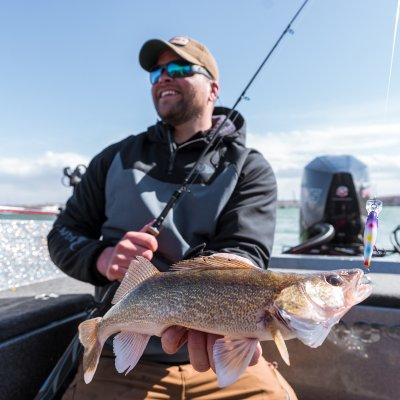
"The shorter rods give you a little more contact with the bait, especially in windy conditions, while the longer rods are great for casting and getting the bait farther away from the boat."
Jig & Minnow Expert Picks
Setup #2: Jig & Plastic Setup for Walleyes
One of the most versatile ways to catch walleyes in open water is with a jig and soft plastic setup. Whether you’re covering shallow weed edges, rocky points, or suspended fish, plastics allow anglers to fish quickly while triggering reaction bites from aggressive walleyes.
Recommended Gear
-
6’10” to 7’3” medium or medium-light spinning rod
-
2500–3000 size spinning reel
-
Braided line
-
Jig head paired with paddle tails or split tail minnows
Best For
-
Covering water quickly
-
Active summer walleyes
-
Casting along weed edges and rock structure
Jig & Plastic Expert Picks
Setup #3: Casting Crankbaits for Walleyes
Casting crankbaits is one of the best ways to trigger reaction strikes from aggressive walleyes. Different crankbait styles allow anglers to target fish at multiple depths while covering water efficiently.
Recommended Gear
-
7’ to 7’3” medium moderate rod
-
2500–3000 size spinning reel
-
Braided line with monofilament leader
-
Shallow-diving, deep-diving, or lipless crankbaits
Best For
-
Low-light feeding windows
-
Windy days or overcast conditions
-
Covering large flats and rocky points
"When using braided lines, I always use a monofilament leader line because it provides a little more stretch in the line for when the fish hits aggressively."
Casting Crankbaits Expert Picks
Setup #4: Jigging Rap & Glide Bait Setup for Walleyes
Jigging rap-style baits and glide baits are deadly for triggering reaction strikes from walleyes holding around rocks, weeds, and deep structure. These baits create erratic darting movements that imitate injured baitfish and force fish to react.
Recommended Gear
-
6’10” to 7’ medium fast rod
-
2500–3000 size spinning reel
-
Braided line with monofilament leader
-
Jigging rap or glide bait
Best For
-
Vertical jigging deep structure
-
Casting over rocks and weeds
-
Suspended walleyes
-
Reaction bites
Jigging Rap & Glide Expert Picks
Setup #5: Trolling Crankbaits for Walleyes
Trolling crankbaits is a great way to consistently locate and catch walleyes throughout the open water season. It allows anglers to cover massive amounts of water while targeting fish at precise depths.
Recommended Gear
-
Crankbaits
-
5’ to 14’ trolling rod
-
Snap weights or lead core setups
-
Monofilament, braid, or lead core line
Best For
-
Covering large areas of water
-
Suspended fish
-
Mid-summer basin walleyes
-
Finding active fish quickly
"There are usually two main sizes of line counter reels. If you're looking to pull lead core to get baits down deeper, I recommend using the larger size. For running monofilament or braided lines with something like snap weights, you'll go with the smaller size."
Trolling Crankbaits Expert Picks
Setup #6: Live Bait Rig Setup for Walleyes
Live bait rigs remain one of the most consistent and productive ways to catch walleyes throughout the entire open water season. Whether using a Lindy rig or bottom bouncer setup, live bait presentations excel when fish are pressured or less aggressive.
Recommended Gear
-
7’ to 8’ spinning rod
-
3000 size spinning reel
-
Braided main line
-
Monofilament leader
-
Lindy rig or bottom bouncer rig
Best For
-
Neutral or pressured fish
-
Slow presentations
-
Deep structure and flats
-
All-season walleye fishing
"The braided line helps cut through the water and improves sensitivity, making it easier to detect light bites and maintain consistent bottom contact."
Live Bait Rig Expert Picks
Frequently Asked Questions about Walleye Fishing
Whether you prefer jigging, trolling, or casting crankbaits, having the right rod, reel, and presentation can make a major difference during open water walleye season. These Expert-approved setups help anglers adapt to changing conditions and target walleyes more effectively throughout the year. If you have additional questions about walleye fishing, stop into your local SCHEELS to speak with an Expert.


About our Experts
Tyler’s passion for fishing and more than 16 years of experience at SCHEELS have helped him gain knowledge across a variety of fishing techniques and gear. Through hands-on experience, ongoing training, and helping anglers every day, Tyler enjoys sharing practical tips and trusted advice to help others find success on the water.