



How to Choose a Baseball Glove
No matter the level of competition, having confidence when stepping out onto the baseball field is key, which is why choosing the right baseball glove is so important. Whether you’re picking out a glove for yourself or a player, our Baseball Experts explain the key parts of a glove, how sizing works, and what to look for when choosing your next glove.
Parts of a Baseball Glove
Before you start shopping, it’s important to have a good understanding of the parts of a baseball glove. Each affects performance, comfort, and durability. Here are the main parts of a baseball glove and their purpose.
-
Palm: The most important area of the glove—where every ground ball, pop fly, and line drive lands. A high-quality palm ensures long-lasting performance.
-
Web: Connects the thumb and index finger, forming the pocket that helps you catch and secure the ball. There are many different types of glove webs, each designed to help a particular position.
-
Lacing: Runs throughout the glove, securing the fingers and web. High-grade leather lacing adds strength and structure to your glove.
-
Hand Opening: Available in different fits—standard, narrow, or adjustable—to provide glove control and comfort for every player, especially younger athletes.
-
Palm Liner: The inner layer that touches your hand. Softer liners improve comfort and wick away moisture during long games.
Expert Tip | A well-constructed glove with quality materials makes a big difference for both youth and adult players. Gloves with poor palms, weak lacing, or stiff liners can hinder performance and break down quickly.
Baseball Glove Types by Position
Different positions require different glove styles. Choosing a glove designed for your position improves performance on the field.
Catcher’s Mitt
-
Shape: Round, with thick padding for protection and a deep pocket for ball control.
-
Size Range: Youth 29.5”–32”, High School/Adult 32.5”–34” (circumference)
-
Best For: Catching fastballs and curveballs; maximum hand protection.
First Base Mitt
-
Shape: Long and curved (“scoop-style”) to help field low throws.
-
Size Range: 12”–13”
-
Best For: First basemen who need a deeper pocket for catching and scooping throws.
Pitcher’s Glove
-
Shape: Similar to an infielder’s glove but with a closed web to conceal grip.
-
Size Range: 11.5”–12.5”
-
Best For: Pitchers who want to hide their grip and maintain versatility in the field.
Outfield Glove
-
Shape: Longer and deeper for catching fly balls.
-
Size Range: 11.5”–12.5”
-
Best For: Outfielders who need extended reach and control for line drives and pop flies.
Infield Glove
-
Shape: Smaller with a shallow pocket for fast ball transfer.
-
Size Range: 11”–11.75”
-
Best For: Quick transitions and accurate throws in the infield.
Expert Tip | If you play multiple positions, look for a glove in the 11.5”–12” range with an open web (like an I-Web or Modified Trapeze) for flexibility across infield and outfield play.
How to Measure a Baseball Glove
Fielding Gloves
-
Measure from the tip of the index finger along the palm to the heel of the glove.
-
Most gloves range up to 12.5 inches for youth and adult players.
Catcher’s Mitt
-
Use a flexible tape measure around the mitt’s circumference, starting at the tip of the index finger, around the palm, and back.
-
Youth mitts: 29.5”–32” | High School & Adult: 32.5”–34”
-
Try the mitt on for comfort; a well-fitting mitt improves control and reduces injury risk.
Baseball Glove Size Charts
When finding the right size baseball glove, there are several factors to consider including hand size, age, and field position. The baseball glove size charts below are a great starting point in narrowing your size options.
Youth Baseball Glove Size Chart
| Age | Baseball Glove Size |
|---|---|
| 5 & under | 9" - 10" |
| 6 - 7 | 10" - 10.5" |
| 8 - 10 | 10.75" - 11.5" |
| 11 -12 | 11" - 12" |
Youth Catcher's Mitt Size Chart
| Age | Catcher's Glove Size |
|---|---|
| Under 7 | 29.5" - 30" |
| 8 - 10 | 30" - 32" |
| 11 - 13 | 31" - 32.5" |
High School & Adult Baseball Glove Size Chart
| Position | Glove Size |
|---|---|
| Infield | 11" - 12.25" |
| Outfield | 12.5" - 12.75" |
| First Base | 12" - 13" |
| Pitcher | 11.5" - 12.5" |
| Catcher | 32.5" - 34" |
Baseball Glove Web Types
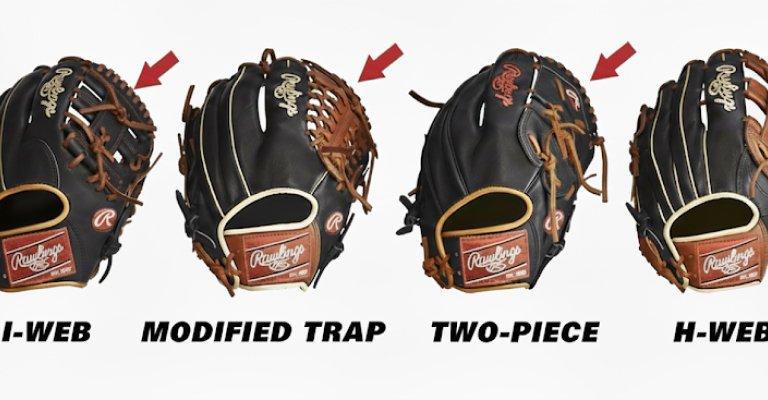
Aside from size and position, you’ll also want to consider the baseball glove’s web type. To improve efficiency in catching and transferring the ball, you’ll want to find the right glove web type that matches your preferences and position.
Below is a brief summary of the four most common web types:
-
I-Web: This type is common among infielders because it lets dirt sift through while fielding.
-
Modified Trapeze (Mod Trap): This type is popular with pitchers and infielders. It features a leather strip down the middle of the webbing for added stability and to help hide the pitcher’s grip.
-
Two-Piece Web: This style is mainly used by pitchers because it helps conceal the pitcher’s grip the best. The added coverage means added weight, however.
-
H-Web: This web is used by infielders and outfielders. It’s strong yet open enough to track fly balls.
Aside from these four baseball glove web types, there are a few more position-specific web types including basket, trapeze, single-post, and dual-post.
Baseball Glove Materials & Price Points
Not all gloves are created equal—materials affect durability, feel, and break-in time.
-
Premium Leather: High-quality leather offers long-lasting durability, a soft feel, and superior performance. These gloves often feature reinforced lacing and padding for extended play.
-
Mid-Grade Leather: Durable and reliable, these gloves are slightly easier to break in while still providing solid performance for serious players.
-
Entry-Level or Synthetic: Designed for youth or recreational players, these gloves are easier to break in, lighter in weight, and provide a good balance of comfort and affordability.
Expert Tip | High-end gloves are an investment that can last 10–15 years, while entry-level gloves are great for learning and youth play.
When choosing your next baseball glove, prioritize fit and comfort above all—having control of the glove matters more than strictly following size recommendations. Make sure the web type and glove size match your primary position, and for youth players, adjustable wrist closures can provide a more secure fit and better glove control. Take the time to try on multiple gloves, comparing feel, pocket depth, and flexibility, to find the one that feels just right for you. If you need additional help or have questions about how to choose a baseball glove, contact your local SCHEELS to speak with a Baseball Expert!