


How to Buy a Football Helmet

Parents, coaches, players, and fans love the excitement a close football game brings. But with the excitement comes risk, and keeping players safe is a top priority for parents and coaches. One must-have piece of football equipment is a high-quality helmet to protect the head from serious injuries. Choosing the right football helmet can be a difficult decision with a variety of types, sizes, and features available. Our Football Experts explain what to look for when choosing a football helmet for the season ahead.
Parts of a Football Helmet
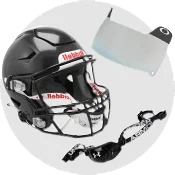
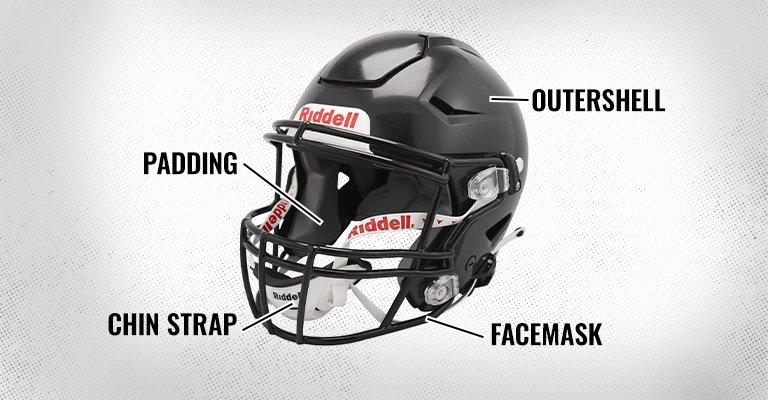
Understanding the parts of a football helmet is an important first step when buying one, so you know which materials provide the best protection.
Outer Shell
The outer shell is the hard, plastic part of the helmet that takes most of the force upon impact. It's important to choose a helmet with a strong outer shell that can withstand hits without cracking or breaking. Most shells are made out of ABS (Acrylonitrile Butadiene Styrene) because it’s strong and efficiently absorbs impact. You’ll also find more affordable helmets made from polycarbonate and carbon fiber too. The ventilation system is also part of the shell and helps promote airflow to keep the players cool and comfortable throughout the game.
Padding
The padding sits directly against the player's head and helps absorb shock during impact. Many football helmets feature foam padding that can be inflated or adjusted for a more custom fit, allowing for greater comfort and protection. There are typically two main types of foam—both offer a high level of protection:
-
Thermoplastic Urethane (TPU) Foam: Doesn’t require any break in time
-
Vinyl Nitrile Foam: Requires some time to form to the player’s head for optimal protection
Facemask
The facemask is the part of the helmet that protects the player's face from hits or collisions. Some helmets include a facemask while others you have to purchase the facemask separately. Facemasks are typically made from carbon steel, stainless steel, or titanium. There are a variety of different types of facemasks depending on the player’s position to ensure optimal protection.
-
Open-Cage Facemask: This type of facemask offers oral and jaw protection for players who need their field of view open. These are ideal for quarterbacks, defensive backs, wide receivers, running backs, kickers, and tight ends.
-
Closed-Cage Facemask: This type of facemask offers nose, jaw, and oral protection for players who encounter hard hits consistently throughout the game. These are ideal for linemen, fullbacks, and linebackers.
Chin Strap
The chin strap secures the football helmet to the player's head and should fit snugly—but not too tight—to keep the helmet in place during gameplay.
Types of Football Helmets
There are two main types of football helmets available: youth and varsity. Youth helmets are typically designed for players in elementary and middle school, while a varsity helmet is ideal for players in high school and beyond. Each of these types of football helmets is tailored to fit different age groups, head sizes, and competition levels.
Expert Tip | Check your league’s regulations to make sure your football helmet meets the required standards.
Football Helmet Fit & Sizing
A football helmet should fit snugly and not move around when the player runs or moves their head. If you’re wondering how to measure for a football helmet, follow these steps:
-
Using a flexible measuring tape, wrap around the player’s head one inch above their eyebrows.
-
Record this measurement.
-
Refer to the brand’s specific size chart that’s on the product page. If the measurement is between sizes, choose the closest size down.
Youth Football Helmet Size Chart
| Helmet Size | Head Circumference |
|---|---|
| Extra Small | Up to 20 in. |
| Small | 20—20.75 in. |
| Medium | 20.75—21.5 in. |
| Large | 21.5—22.25 in. |
| Extra Large | 22.25—23 in. |
Varsity Football Helmet Size Chart
| Helmet Size | Head Circumference |
|---|---|
| Small | 21.5—22 in. |
| Medium | 22.25—22.75 in. |
| Large | 23—23.5 in. |
| Extra Large | 23.75—24.25 in. |
Please Note: This is a general guideline. Make sure to try the football helmet on and test that it doesn’t slip or move around. The player should feel a slight amount of pressure around their temples, but no discomfort or pain.
Additional Considerations
Aside from the material, type, and size, there are other things to consider when choosing a football helmet.
Football Helmet Cost
Football helmets range in price from $50 to over $500. These prices vary based on many factors, including the materials used, certifications, and other features. If your player is playing at a competitive level, they’ll most likely need a more expensive helmet to provide the proper head protection.
Football Helmet Certification
Consider helmets that have been certified by organizations such as NOCSAE. NOCSAE is responsible for setting safety standards for helmets used in football and other sports. A certified helmet indicates that it has met the standards for impact resistance, performance, and safety.
Football Helmet Features
Some football helmets come with additional features, such as ventilation systems, moisture-wicking materials, and customizable fit systems. Consider your budget and the player's specific needs when deciding which additional features to prioritize.
When choosing the right football helmet for the upcoming season, it’s important to find the right type and size for your player so they stay safe and comfortable on the field. If you’re wondering what other football equipment you need for the season or need additional help finding the perfect football helmet, stop into your local SCHEELS to speak with an Expert!