



How to Choose Shoe Insoles
Whether you're struggling with foot pain, back pain, or are seeking extra support, shoe insoles and orthotics can provide the comfort you need. Our Footwear Experts break down the differences between insoles and orthotics and how to make the right choice for your activity level and foot type.
Insoles vs. Orthotics
While often used interchangeably, it's important to understand the difference between insoles and orthotics so you can find the best support for your feet.
Insoles
Insoles (often called shoe inserts) are pieces of material that can replace the standard padding inside your shoes. They are designed to fit a wide range of foot types, and will typically be categorized by shoe size. Insoles are the perfect option for those who are looking for a minimal layer of padding and want to extend the life of their footwear.
Who are insoles best for?
-
Anyone looking to improve the fit of their shoes
-
People who experience minimal discomfort or low-level pain
-
Individuals who spend extended periods standing or walking and need extra cushioning
-
Athletes who train regularly and seek general shock absorption or enhanced comfort during activities
Orthotics
Similar to insoles, orthotics deliver support and cushioning in your shoes and work to alleviate pain. However, orthotics are specially designed to address specific issues, correct problems, and promote healing for ailments. While you typically get orthotics custom-made for your feet by a professional, there are effective over-the-counter options available.
Who are orthotics best for?
-
People experiencing chronic or persistent foot pain
-
Athletes requiring alignment or support to prevent or manage injuries
-
Individuals who have pain in other areas—knees, hips, or back—due to foot issues
-
Those with diagnosed foot conditions like flat feet, high arches, plantar fasciitis, and others
How to Choose the Right Support
The first step to choosing your support type is addressing your main concerns. Here are a few general questions to consider when narrowing down your search:
Am I looking for support or to correct a specific issue?
If you seek general support for your daily activities, lean towards insoles. If you are experiencing persistent discomfort or pain in your feet, consider orthotics.
Where am I experiencing pain or discomfort?
For foot-specific issues and low-level discomfort, insoles may offer enough support. If your pain is located in your knees, hips, back, or your foot pain is severe, orthotics and professional help are recommended.
How long have I been experiencing this issue?
If your pain is short-term or comes and goes, a comfortable pair of insoles can help alleviate discomfort. Long-term or chronic pain typically requires a more dedicated and corrective solution like orthotics.
What is my activity level?
Your activity level plays a significant role in the type of support you need. For everyday walking or light activity, general comfort insoles may suffice. However, if you’re a marathon runner, a nurse on your feet all day, or are a professional athlete, higher impact and extended periods of standing will likely require more specialized support, stability, and cushioning that can be found in orthotics.
Finding the Perfect Fit
Beyond general concerns, understanding your foot type and gait is crucial for finding the perfect solution. There is a range of insoles and orthotics that will support your foot and arch in different ways. If you experience the following issues, insoles or orthotics may help improve your shoe comfort and experience.
Supination
Supination, or underpronation, is when you direct most of your weight on the lateral side of your feet, causing the foot to roll outward. Your shoes will appear more worn on the outer edges if you supinate. Supinators may experience increased foot pain, ankle instability, and are prone to conditions like plantar fasciitis and shin splints.
Recommended Support Type: Cushioned insoles or orthotics specifically designed with shock absorption are often recommended to distribute pressure more evenly.
Neutral Pronation
If your shoes are worn fairly evenly on the bottom, this is a sign that you have a neutral gait, meaning your food has a balanced rock during movement. Those with a neutral gait may experience general soreness in the ball of the foot or heel and shin splints due to impact.
Recommended Support Type: Neutral insoles to support the arch and improve cushioning.
Overpronation
Overpronation is the opposite of supination, resulting in the foot rolling inward, causing weight to fall on the medial side of the foot. If your shoes have more wear on the inside edge, this is a sign that you overpronate. Overpronation can lead to plantar fasciitis, Achilles tendinitis, bunions, and knee pain.
Recommended Support Type: Insoles or orthotics designed with firm arch support and a focus on stability.
The Aetrex At SCHEELS
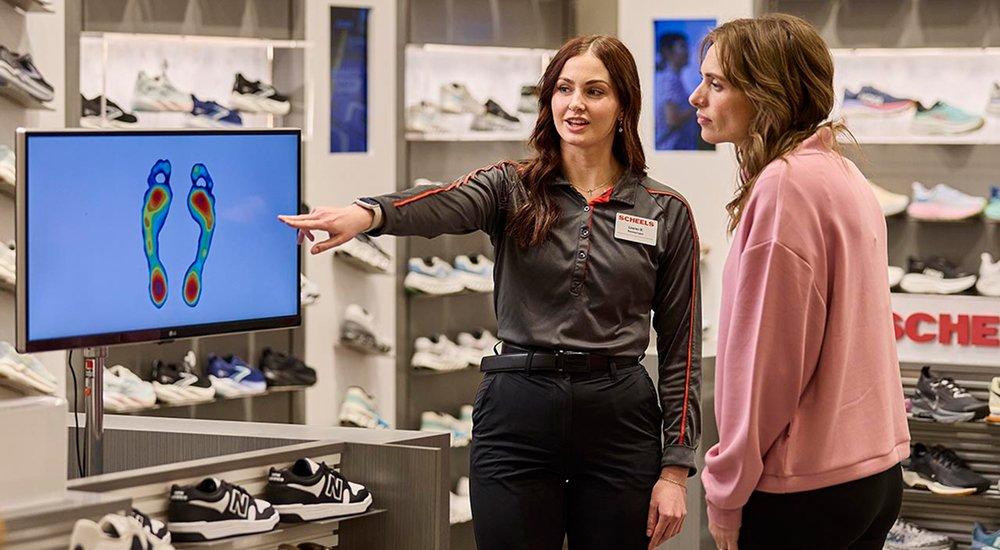
If you're still unsure of what type of insert or shoe you need, stop by select SCHEELS stores that feature the Aetrex device. This all-in-one foot scanning machine allows our Footwear Experts to accurately assess your foot type, pressure points, and more, helping you find the perfect match for your needs. For more information, check out our full blog on the Aetrex Albert 2 Pro at SCHEELS.
Understanding the type of support you need is crucial to finding the right orthotic or insole. Whether you're experiencing long-standing foot pain, are on your feet all day, or are just looking for extra comfort, having the right amount of cushion and support will improve your daily activities. If you have additional questions about choosing the right pair of insoles or orthotics, head into your local SCHEELS to speak with a Footwear Expert.