



Understanding Fish Finder Sonar
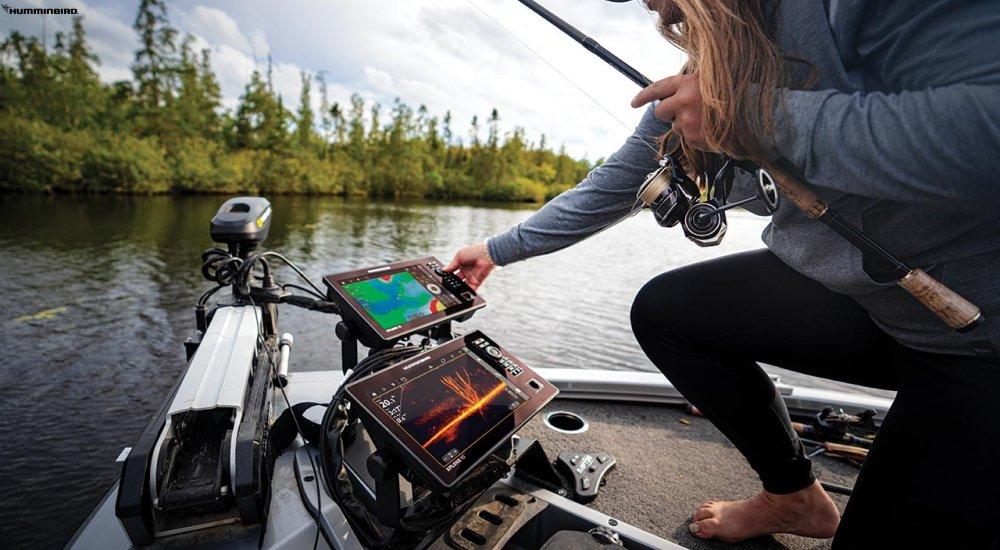
Using a fish finder to view underwater structures and locate fish is a great way to make the most of your day on the water. However, understanding how a fish finder works and reading a fish finder can be a little overwhelming, especially for beginner anglers. Whether you’re looking to buy a new fish finder or needing some help understanding how to use your fish finder, our Fishing Experts share the basics you need to know about sonar technology.
How Fish Finders Work
A fish finder consists of two main components: the display unit and the transducer. The transducer is placed in the water and emits sonar pulses. These pulses bounce off objects like fish, the bottom, and structures, and returns back to the transducer. The display unit, which is mounted in the boat, processes this information a presents it on the screen for the angler to interpret.
How to Read a Fish Finder
In order to use your fish finder properly, you need to know how to read the fish finder screen and data that appears. There are four main types of sonar technologies—traditional, down imaging, side imaging, and active. Depending on your fish finder, you could have access to a combination of these different sonars, which each influencing the way the fish, structures, and bottom appear on the display screen.
Traditional Sonar (2D/CHIRP)
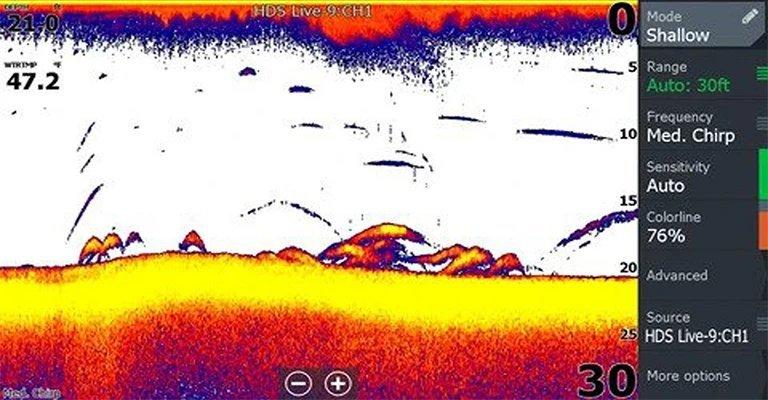
2D sonar is a great way to scan for schools of fish because the images don't come in as clear as other sonar options. Schools of baitfish, weeds, and larger structures appear as colorful blobs, while arches, color marks, or clouds represent game fish or baitfish.
2D sonar has greatly improved with the option of CHIRP sonar. CHIRP sonar was developed to excel in deep water that’s greater than 25 feet. The difference between traditional 2D sonar and CHIRP sonar is the number and range of frequencies emitted from the transducer. Compared to traditional 2D sonar, these images come back clearer and more well-defined so you’re able to easily distinguish between bait and game fish as well as structure and vegetation.
Down Imaging Sonar
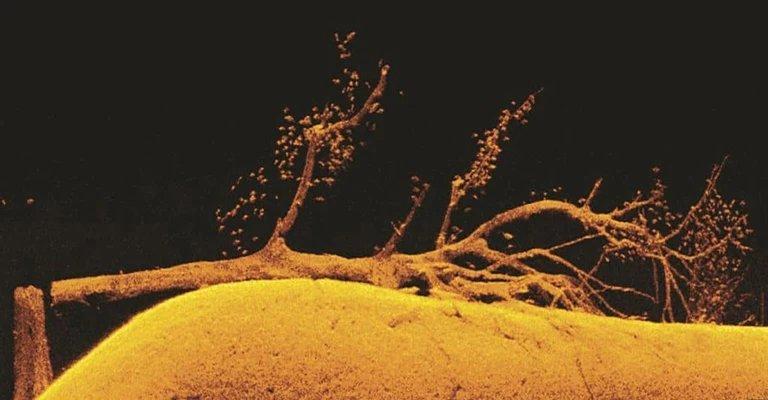
If you're fishing in or around cover, using down imaging sonar comes in handy. Just as the name describes, down imaging sonar allows anglers to see directly under their boat. Although down imaging provides anglers with a very small picture of the water, these sonar images come back more picture-like rather than traditional 2D sonar, making it easier to identify game fish thanks to the bright coloring and dark shadows.
Side Imaging Sonar
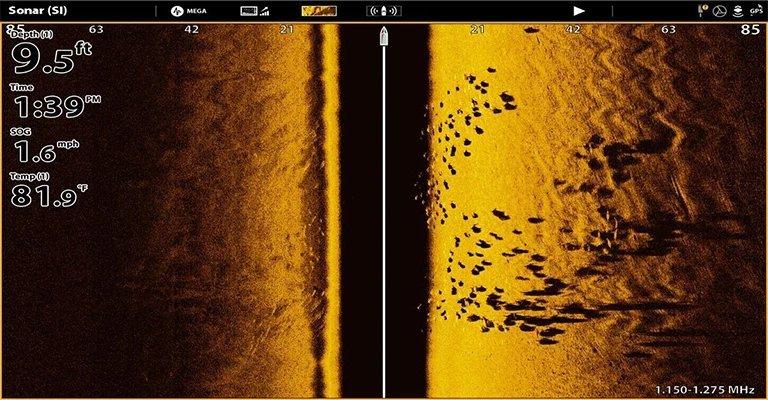
For those who spend more time fishing in shallow waters or looking to cover large expanses of water no matter the depth, you may be interested in using side imaging sonar. With side imaging sonar, you’re able to see a great range on either side of your boat. Unlike other sonar technologies, side imaging sonar is read top to bottom with your history moving towards the bottom. Similar to down imaging, side imaging sends picture-like sonar images to your display so you can clearly identify objects like fish, rocks, and other structures as well as locate depth based on shadows.
Live Scanning Sonar
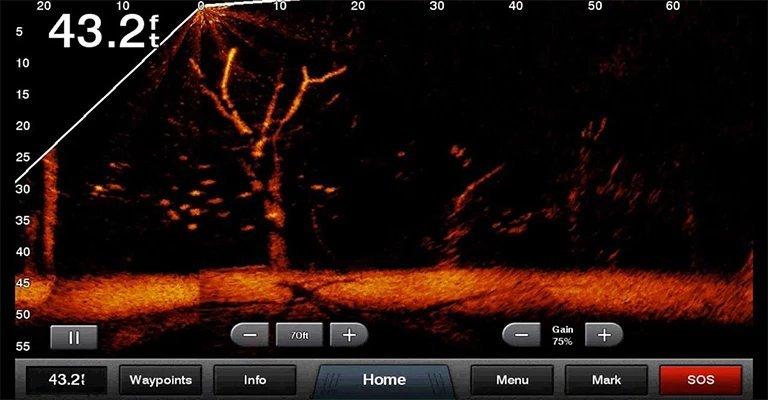
A major breakthrough in sonar technology is live scanning sonar. With live scanning sonar, you’re able to see what’s happening in real time below and around your boat. The sonar images received on your fish finder allow you to clearly view details of both fish and structures. With this real-time feedback, anglers can change their strategy to encourage a strike.
Related Expert Content:
How to Use a Fish Finder Setup
SCHEELS Pro Staff, Pat Schlapper, walks through how he uses his fish finder setup to locate where the fish are biting.
Understanding the basics of how a fish finder works and how to read your fish finder sonar will make you more successful on the water. Each year fish finding technologies are constantly improving to provide anglers with clearer, more detailed information; however, the basics of understanding how to read these different sonar technologies remain the same. Whether you have questions about fish finders from top brands like Garmin, Humminbird, or Lowrance or how to use specific features on your fish finder, contact one of our Fishing Experts at your local SCHEELS.
About our Experts

Pat Schlapper started fishing in local Wisconsin tournaments before making the transition to fishing professionally as a Bassmaster Elite Series angler. He qualified for the Elite Series after winning the B.A.S.S. Nation Championship on Pickwick Lake in 2020.