



How to Sight in a Rifle Scope
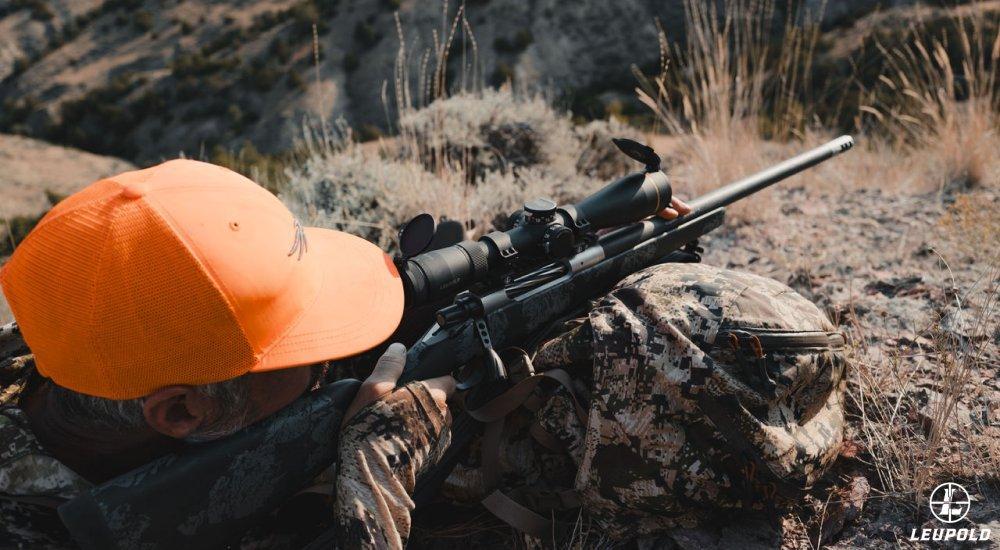
Before heading into the field, it’s essential to make sure your rifle scope is properly sighted in. Sighting in (also called zeroing a scope) aligns your reticle with the bullet’s point of impact so your shots land exactly where you aim. Follow this step-by-step guide to learn how to sight in a rifle scope quickly and accurately.
Quick Steps to Sight In a Rifle Scope
-
Bore sight your rifle at 25 yards.
-
Set up at your zeroing distance (commonly 100 yards).
-
Fire a 3-shot group at the target.
-
Measure bullet impact vs. target center.
-
Adjust windage (left/right) and elevation (up/down).
-
Fire another group and repeat adjustments.
-
Fine-tune parallax if your scope has this feature.
For more information, continue reading our full explanation of each step below!
Step #1: Bore Sighting Your Rifle
Bore sighting is the process of aligning your barrel with your reticle to get close to zero before live firing. It saves time and ammunition at the range.
-
Laser bore sighting: Insert a laser bore sight into your chamber, activate the laser, and align the scope reticle with the laser dot.
-
Manual bore sighting: Remove the bolt, look down the barrel to center the target, then adjust your scope’s windage and elevation knobs until the reticle matches the target.
Bore sighting won’t give you perfect accuracy, but it will get you close enough to finish at the range.
Step #2: Setting Up at the Range
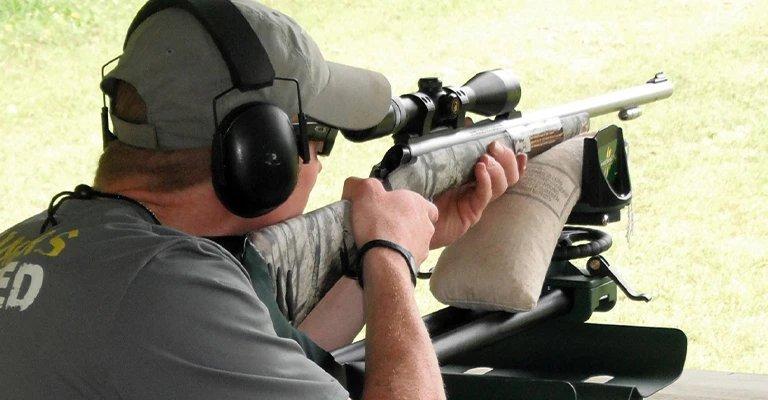
The range is where you’ll fine-tune your zero. Here’s what you’ll need:
-
A sight-in target (gridded for easier measurements).
-
A shooting rest to keep your rifle steady.
-
The same ammunition you’ll use while hunting for consistency.
Choose your zeroing distance based on your hunting style. Most shooters zero at 100 yards, but if you typically shoot farther, you may prefer 200 or 250 yards.
Step #3: Adjusting Windage & Elevation
Windage controls left-to-right adjustments, while elevation controls up-and-down adjustments. Here’s how to dial them in:
-
Fire a 3-shot group at the target.
-
Measure the group’s center relative to the bullseye.
-
Convert the distance to MOA (Minute of Angle).
-
1 MOA = 1 inch at 100 yards.
-
At 200 yards, 1 MOA = 2 inches.
-
-
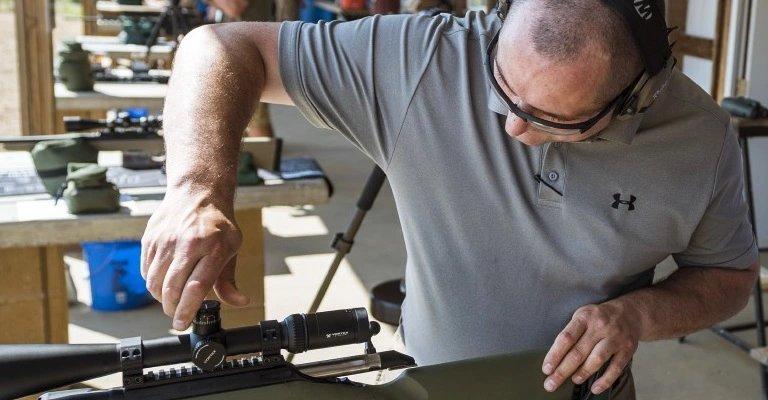
Use your scope’s click values (often ¼ MOA per click) to adjust.
Example: If your group is 2 inches left at 100 yards, you’ll need 2 MOA right. With ¼ MOA clicks, that means 8 clicks on the windage knob.
Repeat the process—fire, measure, adjust—until your point of aim and point of impact match.
Step #4: Adjusting Parallax
If your scope has a parallax adjustment (often a side focus knob), use it to ensure the reticle stays fixed on the target, even if your head moves.
To adjust:
-
Look through the scope and shift your head slightly.
-
If the reticle appears to move on the target, turn the parallax knob until it stays steady.
-
Note the yardage marking for future reference.
This step ensures maximum accuracy at longer ranges.
Frequently Asked Questions about Sighting in a Rifle Scope
Here are some of the most common questions our Optics Experts receive from customers.
What distance should I sight in my rifle scope?
Most hunters sight in at a 100 yards, but choose the range closet to your typical shooting distance.
Do I need a bore sighting tool?
A laser bore sight makes the process faster, but you can bore sight manually.
How many shots does it take to sight in a rifle?
It typically takes between 9—12 rounds, which is three to four groups. It really depends on your experience, how many adjustments need to be made after each group, and if proper bore sighting was done first.
What ammo should I use when sighting in a rifle?
Our Experts recommend using the same ammo you’re planning on hunting with. Different ammo types and even brands have different flight trajectory.
With your scope sighted in, you’ll be ready to head into the field and take aim at a real target! If you have any questions about sighting in a scope, stop by your local SCHEELS and talk to one of our Optics or Firearm Experts!