



Choosing an Ice Fishing Fish Finder
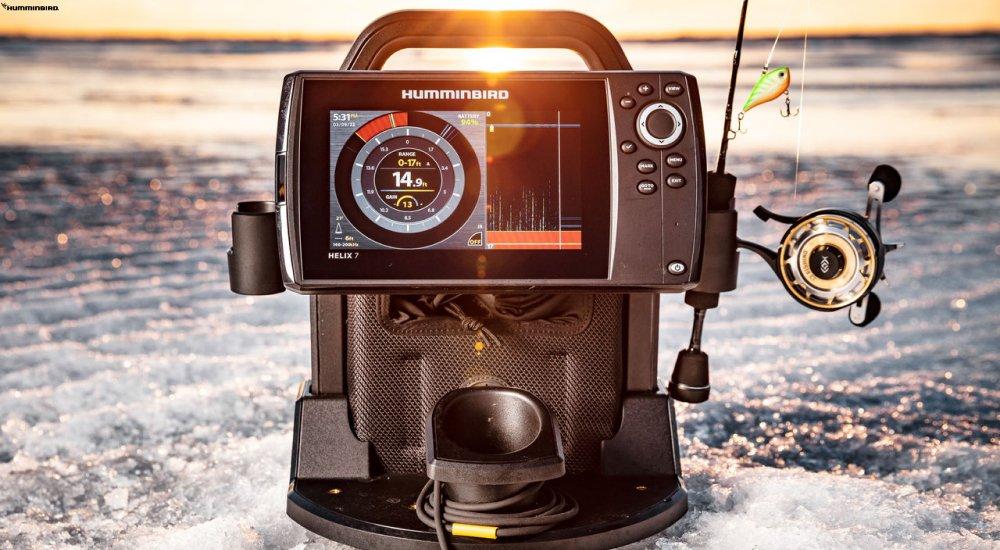
Using a fish finder while ice fishing helps you drill holes in the right spots for a more successful day on the ice. However, finding the right ice fishing fish finder can be tricky, especially with the recent advancements in locator technology. To help you choose the right one, our Ice Fishing Experts walk you through the types of ice fishing electronics and how they work so you can narrow down which is best for you.
#1: Ice Fishing Flashers—Simple & Reliable
Ice fishing flashers are the traditional choice for ice anglers, trusted for decades for their speed and accuracy. Like all fish finders, flashers use sonar technology: a transducer sends sound waves beneath the ice, then measures the return signal to detect depth, bottom structure, and fish. The display is a circular dial, showing the entire water column. Different color signals—red, yellow, and green—represent the strength of the return.
Flashers are simple, reliable, and great for anglers who want feedback without extra features like GPS or mapping.
Related Expert Content | How to Use a Flasher >
Pros of Ice Fishing Flashers
-
Instant, real-time sonar feedback
-
Durable and cold-weather tested
-
Simple interface—easy to learn and use
-
Lower cost compared to digital units
Cons of Ice Fishing Flashers
-
No GPS or contour mapping
-
Limited customization or screen options
-
Typically ice-only (not for open water use)
#2 Convertible Units—Year-Round Versatility
If you want a fishing electronic setup that works on the ice and in open water, a convertible unit is your best option. These systems use the same fish finder you’d mount on your boat in summer, paired with an ice fishing conversion kit that includes an ice transducer, power source, bag, and cradle.
Most convertible units feature a flasher view as well as a typical standard sonar view as well. Many also include GPS and mapping, so you can mark waypoints, track contours, and return to your favorite spots no matter the season.
Pros of Convertible Units
-
Use all year round
-
Brief history of what’s below the ice
-
Advanced features like GPS and mapping
Cons of Convertible Units
-
Bulkier than a traditional flasher
-
Requires conversion kit for ice use
-
Higher upfront cost than a basic flasher
-
Must check compatibility between your unit and the conversion kit
#3: Live Sonar Technology—Real-Time Underwater View
Live sonar is the latest innovation in ice fishing electronics, giving anglers a real-time view of fish movement and structure beneath the ice. Unlike traditional sonar or flashers that show history or return signals, live sonar provides instant video-like feedback, so you can see how fish react to your lure in real time. These systems often combine sonar and radar-based imaging to deliver multiple viewing modes.
Pros of Live Sonar
-
Real-time imaging of fish and lure movement
-
Multiple viewing modes (Down, Forward, Perspective)
-
Helps find fish without drilling multiple holes
-
Incredible accuracy and detail
Cons of Live Sonar
-
Steeper learning curve for beginners
-
Highest cost among ice fishing electronics
-
Requires a stable mount and proper setup
-
Larger, heavier systems—not as portable as flashers
-
Limitations at night
#4: Underwater Cameras—Visual Confirmation
An underwater camera is not a replacement for a sonar fish finder, but it’s a valuable tool to use alongside your flasher or live sonar. Cameras give you an actual video feed of what’s happening under the ice, allowing you to identify fish species, observe fish behavior, and check the type of vegetation or structure.
Pros of Underwater Cameras
-
Keep kids or young anglers interested
-
Identify structure, cover, and vegetation
-
See fish species and behavior in real time
Cons of Underwater Cameras
-
Limited visibility at night or in stained water
-
Not a standalone tool—best when paired with sonar
-
Requires extra battery power and proper cable management
Comparing Ice Fishing Electronics
Our Ice Fishing Experts highlight the key differences between flashers, convertible units, live sonar, and underwater cameras to help you easily narrow down which type of fishing electronic is best for you.
| Flashers | Convertible Units | Live Sonar | Underwater Cameras | |
|---|---|---|---|---|
| Best For | Ice fishing only, quick setup and easy readings | Anglers who fish ice and open water and want one versatile unit | Tracking movement and structure in real time with multiple views | Observing fish species, behavior, and underwater vegetation |
| Display | Circular dial | LCD screen (flasher & sonar views) | Multiple view: Down, Forward & Perspective | Live video feed |
| GPS/Mapping | No | Yes | Yes | No |
| Ease of Use | Beginner-friendly | Intermediate | Advanced | Intermediate |
Our Ice Fishing Experts have made purchasing electronics easier by offering bundles for both live and traditional sonar. Check out top ice fishing bundles now >
No matter which option you choose, having reliable electronics under the ice improves your success and makes each trip more enjoyable. For guidance tailored to your fishing strategy, visit your local SCHEELS store to speak with an Ice Fishing Expert.