



Parts of a Compound Bow: A Beginner's Guide
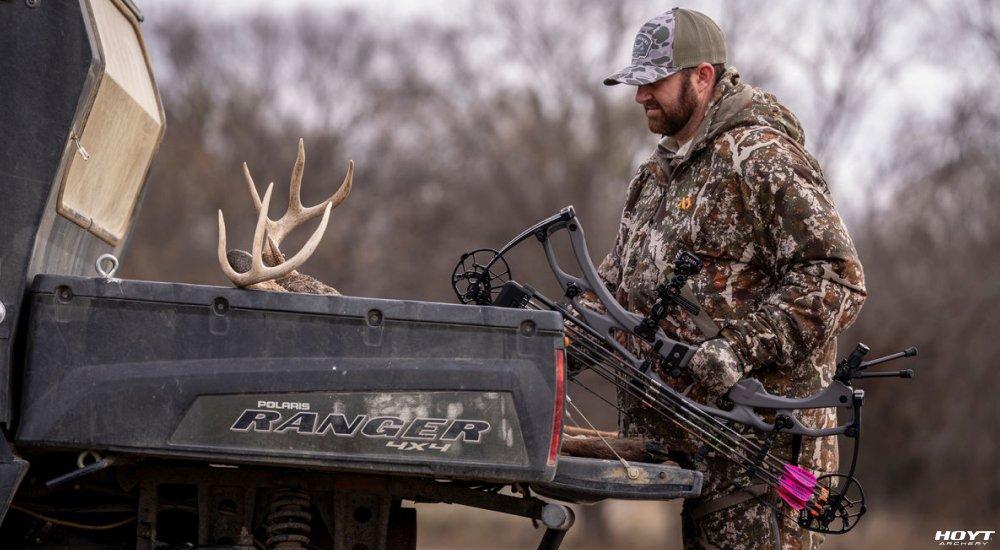
Whether you're starting to bow hunt or looking to buy your first compound bow, understanding the parts of a compound bow is key to improving accuracy, consistency, and overall performance. Each component—from the riser and limbs to the cams, strings, and accessories—plays a critical role in how your bow functions. In this guide, our Hunting Expert, Mike, breaks down each component of a compound bow, explain what it does, and provide tips on selecting the right accessories.
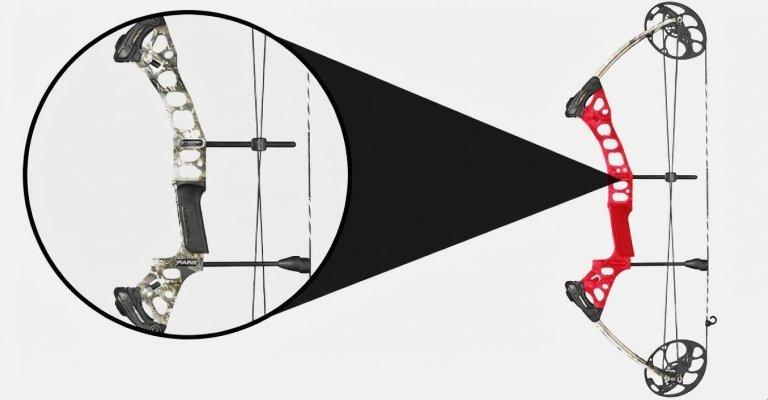
1. Bow Riser—The Core of your Bow
The riser is the central frame of your compound bow. It holds the limbs, grip, and other components together and is where you'll attach many of your bow accessories. The bow riser directly affects the bow’s balance and stability. Most risers are made of aluminum or carbon.
-
Aluminum is durable and cost-effective.
-
Carbon is lightweight, tough, and performs well in cold weather.
The grip is part of the bow riser. This is where you'll hold the bow so it's important to find a grip that feels comfortable in your hand.
2. Cams—The Power of your Bow
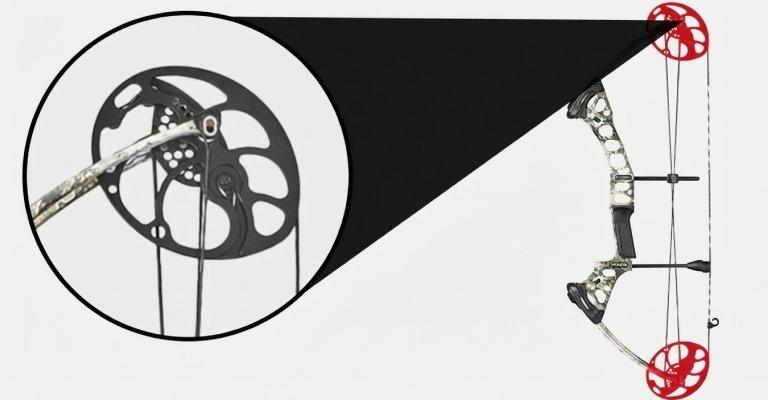
Cams are the wheels or pulleys on your compound bow that give it speed and control. There are three main types of cam systems:
-
Single Cam: One cam at the top, a simple wheel at the bottom.
-
Dual Cam: A cam on both the top and bottom. Offers more speed and power but requires tuning.
-
Wheel Cam: Found on older bows, turns fully over and back.
Cams control your bow’s draw cycle, let-off percentage, and speed. Many bows also have modules, which adjust draw length and fine-tune performance.
3. Limbs & Axle
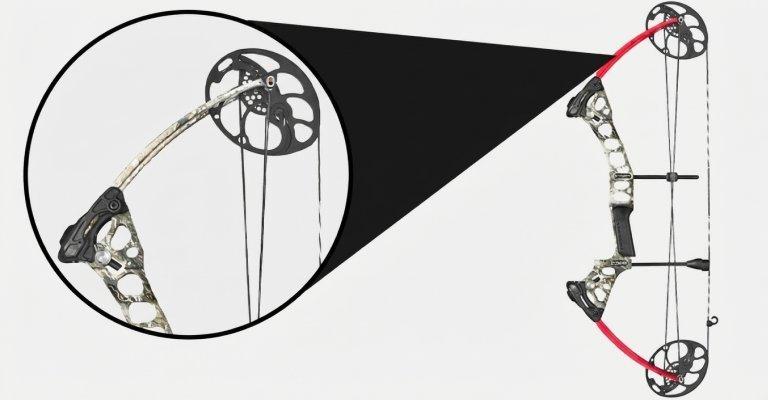
The limbs are the flexible arms of your bow that store and transfer energy when you draw and release, propelling your arrow forward. The axle connects your cams to the limbs and acts as the pivot point for your bow’s mechanics. The limb pockets attach the limbs to the riser and allow you to adjust draw weight using screws—always make adjustments evenly on both limbs to maintain balance and performance.
There are two main types of limbs:
-
Split Limbs: Two separate pieces that often include vibration dampeners for reduced shock and smoother shooting.
-
Single Limbs: One solid piece, typically with dampeners mounted at the top.
Axle-to-Axle Length
These components work together with the axle-to-axle length—the distance between the top and bottom axles—to determine how your bow feels and performs.
-
Shorter axle-to-axle: Compact, maneuverable—ideal for tight spaces like ground blinds or tree stands.
-
Longer axle-to-axle: More stable and forgiving, easier for consistent accuracy.
4. Bow Strings & Cables
The bowstring and cables are the lifelines of your compound bow, holding tension and connecting your cams and limbs.
-
Cables: These support the bow’s tension as you draw and release, controlling how the limbs compress and rebound. They usually run along a roller guard to keep them in place and reduce wear.
-
Bowstring: The main string that launches your arrow. Some strings come with or can be fitted with silencers, which reduce noise and vibration but may slightly decrease speed.
Proper alignment and maintenance of your strings and cables are essential for consistent performance and longer equipment life.
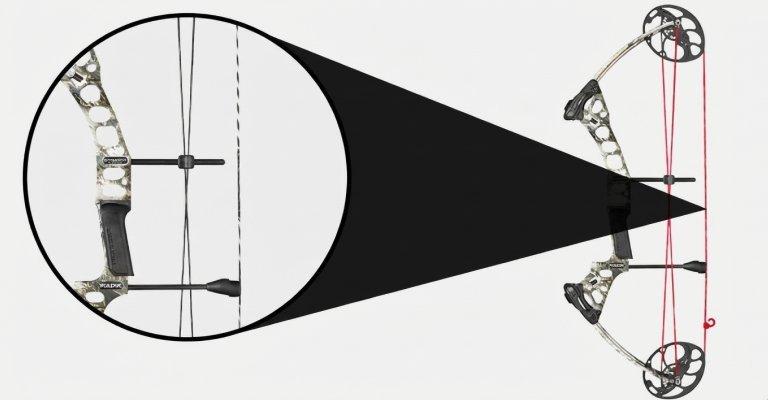
5. Peep Sight & Serving
The peep sight and serving are key components on your bowstring that help with aiming and protect your string for consistent, accurate shots.
-
Peep Sight: A small aperture on your bowstring that helps align your arrow with your sight. Peep sizes vary based on light conditions and sight housing size.
-
Serving: Thread wrapped around the string to protect it from wear and hold the peep in place.
-
Center Serving: The area where you attach your D-loop and nock your arrow. This ensures consistent placement and protects the string from excessive friction.
6. String Stop
A string stop reduces vibration after a shot and prevents the string from bouncing excessively. Most bows have a bottom string stop, while some feature top and bottom stops for extra stability. This contributes to accuracy and overall shooting comfort.
7. Essential Bow Accessories
In addition to the main components, several attachments make your compound bow complete and ready to shoot. These accessories improve accuracy, stability, and comfort while hunting or target shooting.
Bow Sights
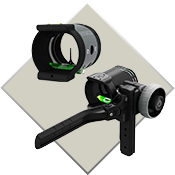
Your bow sight helps you aim more accurately along with your peep sight. There are two main types of bow sights to choose from:
-
Single Pin Sight: Adjustable dial with yardage markers for precise distance.
-
Multi-Pin Sight: Multiple fixed pins for common distances (20, 30, 40 yards, etc.)
Related Expert Content | Choosing a Bow Sight >
Stabilizers
A stabilizer makes sure your compound bow feels more natural even when you aim and draw, helping improve accuracy.
Arrow Rests
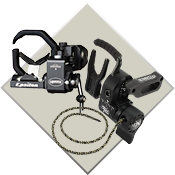
An arrow rest is mounted above the grip and it's purpose is to hold and direct the arrow's flight. There are a few different styles of arrows rests, so it's important to find the one that matches your skill and preferences.
-
Standard Rest: Fixed position for basic setups.
-
Drop-Away Rest: Moves out of the way when the arrow is released. These can be either cable-driven or limb-driven.
-
Whisker Biscuit: Bristle-style rest that holds the arrow securely while allowing vanes to pass through.
Related Expert Content | Types of Arrow Rests >
Arrow Quivers
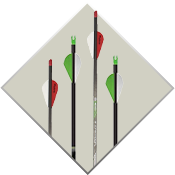
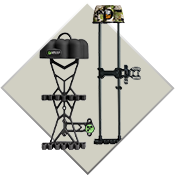
This is designed to hold extra arrows, many styles hold between three and twenty arrows. Some hunters use a quiver that attaches to the bow or on the body.
By understanding these key parts of a compound bow and the necessary essentials, you'll feel more confident choosing the right compound bow and perfecting your setup. If you have additional questions about prepping for the hunt, stop into your local SCHEELS to speak with an Archery Expert.
Frequently Asked Questions about Compound Bows
When working with customers, our Archery Experts get a lot of questions about specific bow terminology. To help beginners and new bow hunters, we’ve compiled answers to the most frequently asked questions about compound bows, their parts, and how they affect performance.
About our Experts

Mike manages all the SCHEELS Outdoors social media accounts and hosts the SCHEELS Outdoors podcast. He has always enjoyed fishing and hunting and now gets to talk with industry pros and vendors about this passion! Mike continues to learn about the latest products and trends by researching and attending SCHEELS University training events.