



What is MOA?
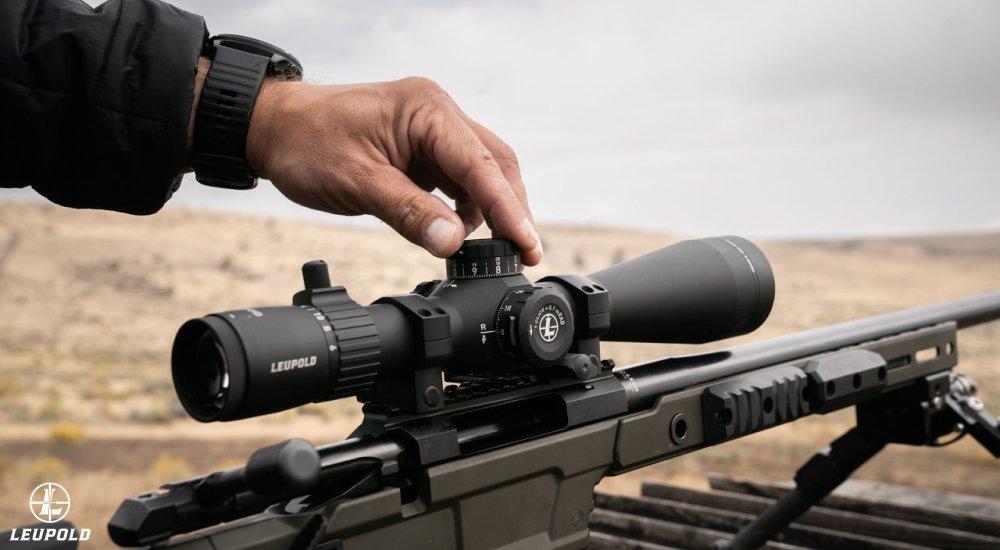
Whether you're an experienced shooter or just beginning to explore rifle scopes, one term you'll likely come across is MOA. So what exactly is MOA and why does it matter? Our Firearm Experts are here to break this term down for you. Follow along as our Experts get you set to fine-tune your rifle scope.
What Does MOA Mean?
MOA, short for Minute of Angle, is a unit of measurement used to make fine-tune adjustments to your rifle scope. MOA is a crucial concept when sighting in your rifle scope that will greatly improve your accuracy in taking shots on target from various distances.
What Is MOA on a Scope?
MOA on a scope is a system that translates into 'clicks.' These clicks, adjustable through the elevation and windage knobs, offer a method of correcting for factors like windage and bullet drop.
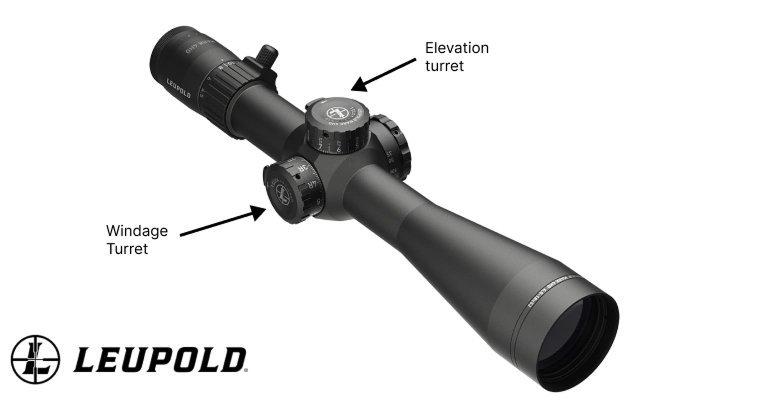
The process involves turning the two different knobs or turrets on your scope– the elevation knob and the windage knob. By turning these two turrets, you can adjust the scope’s crosshairs up, down, left, or right to center on your target for improved accuracy.
-
Elevation Knob: Located on the top center of the scope, this turret allows you to move the crosshairs up and down. It’s primarily used to account for bullet drop over long distances.
-
Windage Knob: Located on the right-hand side of the scope. This turret lets you shift the crosshairs left or right.
Each 'click' represents the adjustment made when you turn the dial on your rifle scope. Both windage (horizontal adjustment) and elevation (vertical adjustment) turrets or dials operate on this 'click' system.
How Far Is a Click in Yards?
Understanding the concept of the Minute of Angle (MOA) in relation to the distance in yards of your target is crucial for precise shot placement. An MOA isn't a straightforward measurement, rather it changes with distance. Here's a simple breakdown across varying distances:
-
At 100 yards, 1 MOA equals approximately 1 inch.
-
At 300 yards, 1 MOA equals approximately 3 inches.
-
At 500 yards, 1 MOA equals approximately 5 inches.
-
At 800 yards, 1 MOA equals approximately 8 inches.
Importantly, most rifle scopes adjust in 1/4 MOA per click. Hence, it takes four clicks to equal approximately 1 inch at 100 yards. While this method remains accurate, precision slightly decreases as distance increases, although it continues to stay close to an increment of 1 inch per 100 yards. This variation can be mitigated with the use of precise ballistic calculations for advanced shooting scenarios.
Remember that different rifle scopes might have different MOA adjustments. Always refer to your specific scope's manual or guide and adjust your MOA accordingly to ensure the most accurate results.
How to Calculate Bullet Drop
Bullet drop is an important factor that shooters need to account for in determining accurate shot placement. Bullet drop is how much a bullet falls due to gravity. To estimate it with MOA:
-
Determine the ballistics of your bullet (use an online calculator for ease).
-
For every 1 inch of bullet drop at 100 yards, adjust your aim by one MOA.
So if your bullet drops 3 inches at 200 yards, you adjust by 1.5 MOAs. Always refer to your specific scope for details on how to make these MOA adjustments. Mastering these calculations helps ensure precise shots, whatever the distance.
How To Calculate Windage
Windage is the left or right adjustment to counteract the wind's influence on bullet trajectory. To calculate windage with MOA, follow these steps:
1. Obtain the wind speed at your shooting location; resources like weather reports or a wind meter can help.
2. Determine the wind value for your bullet (found in ballistic charts), which shows the bullet's deflection in inches, per mph wind at 100 yards.
3. Double the wind value for every additional 100 yards beyond the first. For example, a wind value of 1 at 100 yards becomes 2 at 200 yards.
4. Adjust the MOA on your scope accordingly. Remember, 1 MOA typically corresponds to 1 inch at 100 yards.
Always refer to your specific scope's manual when adjusting windage with MOA.
Knowing MOA is an invaluable part of sighting in your rifle scope and improving your shot accuracy. Understanding how to calculate bullet drop and windage, making those minute adjustments on your scope, and seeing the results in your target accuracy can make the process more rewarding. So, remember this MOA guide when you're dialing in your scope for the season. If you have any more questions on MOA or rifle scopes in general, head to your local SCHEELS and speak with an Optics Expert!