



How to Choose the Right Bow Sight
Choosing the right bow sight makes a difference in your accuracy, confidence, and success in the field. Whether you’re setting up your first bow or looking to upgrade, understanding the different types of bow sights can help you find the best option for your shooting style. Our Archery Experts explain the basics of bow sights including the different types available, pin size, axis, and more.
Parts of a Bow Sight
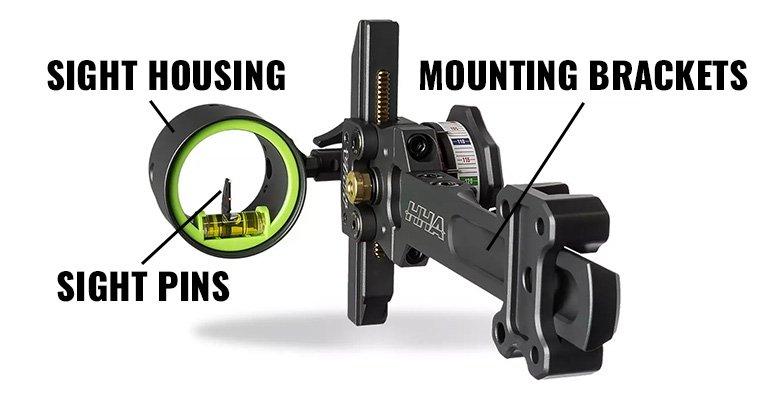
Understanding the basic parts of a bow sight can help you compare models and choose the features that best fit your shooting style. While designs vary, most bow sights include three main components: the sight housing, sight pins, and mounting bracket.
-
Sight Housing: This is the body of the sight that houses the sight pins.
-
Sight Pins: These are the metal pins that are used to line up the shot. Depending on the type of sight, there may be one or multiple pins that are fixed or adjustable.
-
Mounting Bracket: This is where the sight attaches to the bow. It is usually is made out of metal and can be adjusted to fit various bows.
Different Types of Bow Sights
There are four main types of bow sights available: fixed-pin, adjustable, single-pin sights, and electronic rangefinding sights. Each type offers its own unique benefits depending on the hunting environment and preferences.
Fixed-Pin Bow Sights
This type of sight features multiple pins that are fixed to mark certain distances, such as 20, 30, and 40 yards. Once sighted in properly, each pin is a reference point that distance. They are popular for whitetail hunters, beginners, and quick follow-up situations.
Benefits:
-
Multiple preset distances
-
No adjustments before shooting
-
Simple and reliable for use in the field
Considerations:
- More pins can clutter the sight picture
Single-Pin Bow Sights
Single-pin bow sights feature a single aiming pin that can be adjusted to different yardages using a sight tape. By dialing the sight to the desired distance, archers can get a very precise aiming point for each shot. These are popular among 3D archers and competition shooters.
Benefits:
-
Clean sight picture
-
Precise aiming point
-
Easy to focus on the target
Considerations:
- Requires adjustment before each shot at a different distance
Slider & Adjustable Bow Sights
Slider and adjustable bow sights combine the benefits of both fixed-pin and single-pin sights. They feature multiple pins for quick shots at common hunting distances, while the sight housing can be adjusted along a rail system to dial in longer distances using the sight tape.
Benefits:
-
Multiple pins available for quick shots
-
Adjustable for greater precision at longer distances
-
Versatile for a variety of hunting and shooting situations
Considerations:
-
More complex than standard fixed-pin sights
-
Typically heavier and more expensive
-
Requires additional setup to create an accurate sight tape
Single-Pin vs. Multi-Pin Sights
One of the most common decisions archers face when choosing a bow sight is whether to use a single-pin or multi-pin setup. Both options can be highly effective, but the right choice depends on your hunting style, typical shooting distances, and personal preferences.
| Single-Pin Bow Sight | Multi-Pin Bow Sight |
|---|---|
| Cleaner sight picture | Faster target acquisition |
| Precise aiming at any distance | Multiple preset distances available |
| Requires dialing yardage before shooting | No additional adjustments needed |
| Popular for target archery or western hunting | Popular for whitetail hunting |
Choosing 2nd & 3rd Axis Adjustments
When comparing bow sights, you may notice that some models offer 2nd and 3rd axis adjustments. These features help ensure your sight is properly aligned and can improve accuracy.
-
First axis can be thought of as a hinge. Adjusting this makes sure that the sight housing is perpendicular to your bow string and riser.
-
Second axis can be thought of as the steering wheel. When rotating, it tilts the sight housing clockwise or counter-clockwise.
-
Third axis can be thought of like a swinging door. This controls whether your sight housing points slightly toward or away from you.
Most bow sights feature 1st and 2nd axis adjustments, but more premium sights offer the 3rd axis adjustability. Using this axis is especially important for shooters where angles come into play, such as shooting downhill or uphill.
Frequently Asked Questions about Bow Sights
When helping customers, our Archery Experts hear a lot of questions about bow sights. They’ve answered some of the most common questions below to help you find the best bow sight for your needs.
Choosing the right bow sight comes down to how and where you shoot. Whether you prefer the simplicity of a fixed-pin sight, the precision of a single-pin sight, or the versatility of an adjustable slider sight, understanding the differences can help you build a setup that matches your goals. If you have additional questions about choosing a bow sight, stop into your local SCHEELS to speak with an Archery Expert.
About our Experts

Josh’s passion for archery began when his grandpa introduced him to traditional archery and gifted him a custom longbow he still keeps today. He’s hunted with a bow every season since age 12. He began his SCHEELS career in 2021 as Archery Specialty Shop Manager, finding the perfect balance of getting paid for his passion.