



A Complete Guide on How to Choose a Crossbow
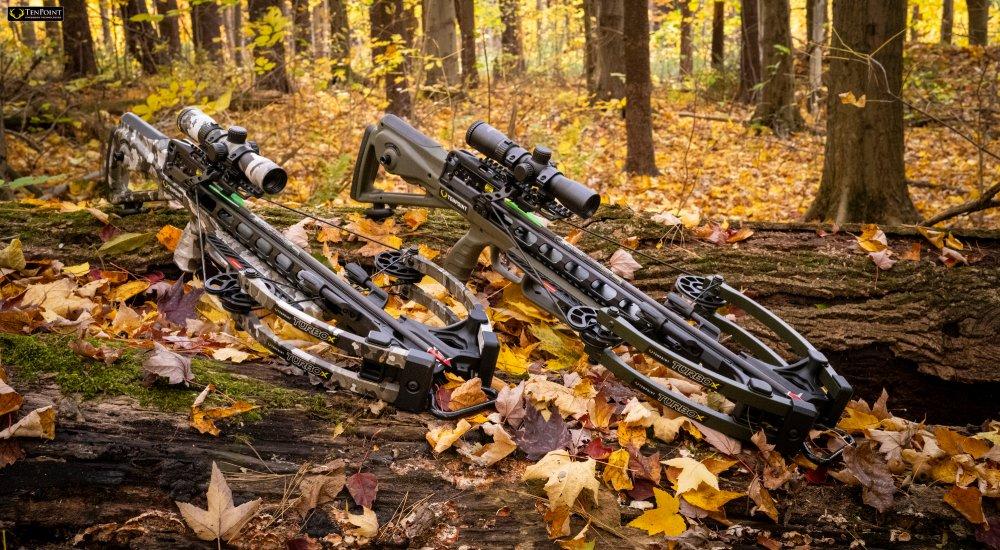
Many hunters choose a crossbow for its accuracy, ease of use, and ability to accommodate physical limitations. If you're new to crossbow hunting, our Archery Experts explain the different types of crossbows and key features to consider, from draw weight and arrow speed to crank systems and overall size, so you can find the right model for your hunt or target shooting.
Key Factors When Choosing a Crossbow
First, it’s important to check your local requirements when it comes to crossbow hunting as each state has different regulations. In addition to state regulations, there are several key factors to consider before choosing your crossbow:
Understanding these factors can help you narrow down your options and find a crossbow that matches your hunting style and experience level. Our Archery Experts dive into each factor to help answer any questions you may have.
Hunting Style & Species
Before comparing specifications, think about how and where you'll hunt. Hunters spending most of their time in ground blinds or treestands often prioritize compact crossbows that maneuver easily in tight spaces. Those pursuing larger game may prioritize higher arrow speeds and kinetic energy. Understanding your hunting style can help narrow down which features matter most.
Draw Weight
Draw weight affects the amount of energy stored in the crossbow, which influences arrow speed and downrange power. Most hunting crossbows range from 90 to 260 pounds of draw weight, though some models reach up to 300 pounds. Higher draw weights generally produce more kinetic energy, making them a popular choice for larger game. While higher draw weights can require more effort to cock, many modern crossbows include crank cocking systems that make them easier to operate.
Arrow Speed
Arrow speed is measured in feet per second (FPS), and most hunting crossbows today shoot between 300 and 450 FPS. Faster arrows produce flatter trajectories, reducing the need to compensate for distance and helping improve accuracy at longer ranges, but they are typically more expensive.
Cocked Width
Cocked width refers to how wide the crossbow is once it's ready to shoot. This measurement can have a significant impact on maneuverability in tight hunting situations.

If you're hunting from a tight ground blind, a treestand with a shooting rail, or walking through thick brush, a wide bow will constantly bump surroundings. High-end models can compress down between 6 to 10 inches when cocked, while more budget options tend to be wider (15+ inches).
Weight
When looking at crossbow weight, pay attention to where the weight sits. Traditional compound bows mount the heavy aluminum riser and limbs at the very front of the bow, making them front heavy, which can be hard to hold for extended periods of time while waiting for a deer to step into the clearing.
Expert Tip | Pick up the bow and see how it balances. Designs like reverse-limb technology shift the riser and cams back toward the trigger, putting the weight between your hands rather than out on a lever. A well-balanced 8-pound bow feels much lighter than a front-heavy 7-pound bow.
Crank & De-Cocking System
One important feature to consider when choosing a crossbow is whether it includes a crank cocking system, and more importantly, if that system allows for safe de-cocking.
-
Some systems help cock the bow but still require firing a bolt to safely release tension at the end of a hunt.
-
Other systems, like TenPoint's ACUslide and Ravin's VersaDrive, provide a controlled and safe way to de-cock your crossbow without firing a bolt.
Why it matters: A safe de-cocking system adds convenience, improves safety, and makes unloading your crossbow at the end of the day much easier. If ease of use is a priority, look for a crossbow that includes both a crank cocking and de-cocking system.
Budget
Crossbows are available at a wide range of price points, from entry-level models under $500 to premium options exceeding $3,000. In general, higher-priced crossbows offer faster arrow speeds, narrower cocked widths, integrated de-cocking systems, improved balance, and higher-quality accessories.
Types of Crossbows
There are three main types of crossbows: recurve, compound, and reverse. Each offers its unique features and benefits for hunting.
Compound Crossbow
Compound crossbows feature a complex design with pulleys and cables to offer high arrow speeds for increased accuracy, especially over long distances. Plus, the design of these crossbows generates greater levels of energy for more powerful shots, making them ideal when hunting large game. Another feature of compound crossbows is the compact, ergonomic design that makes them easy to carry and maneuver in small spaces like a treestand or blind.
Pros:
-
High arrow speeds
-
Consistent and accurate
-
Adjustable components for personalization
Cons:
-
Higher price point
-
A complex design can make it challenging to maintain and repair
Reverse-Draw Crossbow
Reverse-draw crossbows, sometimes referred to as reverse draw, have their limbs positioned in front of the riser, allowing for a longer power stroke. This design allows for more energy return to be transferred for greater speeds and power along with better balance and stability.
Pros:
-
Compact design
-
Improved stability
-
High arrow speeds
Cons:
-
Noise levels can vary from model to model
-
Newer design, meaning a more limited selection
Recurve Crossbow
Recurve crossbows feature a simpler design with limbs that curve away from the shooter at the ends, allowing them to store and release energy efficiently without the need for cams or complex cable systems. This straightforward construction makes recurve crossbows highly reliable and easier to maintain compared to compound models.
Pros:
-
Simple, durable design with fewer moving parts
-
Easier to maintain and repair
-
Generally lighter and more straightforward to use
Cons:
-
Lower arrow speeds compared to compound and reverse-draw models
-
Can be louder when shot
Comparing The Types of Crossbows
Each type of crossbow offers unique advantages when it comes to speed, maintenance, maneuverability, and overall performance. Use the chart below to compare the key differences.
| Features | Recurve | Compound | Reverse-Draw |
|---|---|---|---|
| Maintenance | Easy | Moderate | Moderate |
| Arrow Speed | Moderate | Fast | Very fast |
| Width | Wide | Narrow | Narrow |
| Weight Distribution | Front-heavy | Front-heavy | Balanced |
| Price | Lower | Moderate-high | High |
| Best For | Simplicity | Versatility | Performance |
Frequently Asked Questions about Choosing a Crossbow
Choosing the right crossbow for your hunting needs is an important decision that involves considering various factors and understanding the pros and cons of each type of crossbow as well as the features to prioritize. If you have additional questions about crossbows, stop into your local SCHEELS and speak with an Archery Expert!
About our Experts
Josh’s passion for archery began when his grandpa introduced him to traditional archery and gifted him a custom longbow he still keeps today. He’s hunted with a bow every season since age 12. He began his SCHEELS career in 2021 as Archery Specialty Shop Manager, finding the perfect balance of getting paid for his passion.