


How to Choose Football Cleats

This article is part of the What to Know about Football Cleats series.
When summer football camps start up, the buzz and excitement around the fall season start to set in. Whether you’re a football player or the parent of a player, you know that having the right gear on the field is important. With the right pair of football cleats, players get the security and traction they need for quick movements and acceleration, protection from hits, and support throughout the game. If you’re new to buying football cleats, our Footwear Experts walk you through how to choose football cleats for the upcoming season.
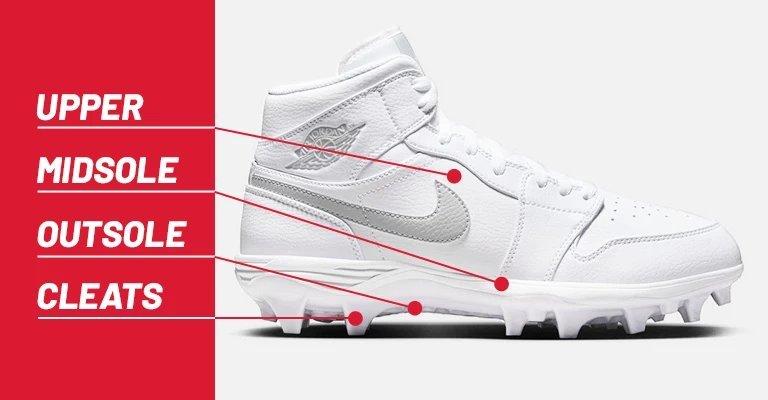
Step 1: Understand the Parts of the Football Cleat
-
Upper: This is the top part of the cleat. Typically made with durable synthetic materials, the upper is built to withstand wear and abrasion. The fit of the upper is what protects and locks in your feet for optimized performance.
-
Midsole: The midsole is a layer of cushioning that connects the upper to the outsole. On football cleats, this acts as a layer of cushioning for comfort as well as an impact absorber to protect your feet from the cleats underneath.
-
Outsole: Football cleat outsoles are typically made of molded plastic or rubber. The outsole houses the cleats and provides the necessary traction for your playing surface.
-
Cleats: Cleats—sometimes called studs—are what grips the ground. Located on the bottom of the outsole, the configuration of your cleats will impact your speed, acceleration, and stopping power.
Step 2: Choose Your Football Cleat Cut
There are three main ways an upper can be cut in order to provide different levels of ankle support: low-top, mid-top, and high-top. If you’re an advanced player, you’ll want to pick the right style of football cleats based on your position, while youth players should typically buy based on what provides the best fit and comfort.
| Position | Low Top | Mid Top | High Top |
|---|---|---|---|
| Lineman | x | ||
| Defensive Back | x | x | |
| Quarterback | x | ||
| Running Back | x | x | |
| Wide Receiver | x | x | |
| Tight End | x |
Low Top Football Cleats
Mid Top Football Cleats
High Top Football Cleats
Step 3: Test the Fit of Your Football Cleats
Last, you want to pay attention to how your football cleats fit. Wearing ill-fitting football cleats leads to distractions, blisters, and injuries.
Follow these steps to know how football cleats should fit:
-
Try your football cleats on later in the day and with your football socks. Since your feet swell throughout the day, it’s best to avoid trying on football cleats first thing in the morning.
-
Once you have your football cleats on, feel towards the front toe of the shoe to make sure your longest toe is about half an inch from the end. You’ll want the forefoot and the heel to fit comfortably snug. Also, pay attention to what kind of material the upper is made from because a full leather upper will stretch while a synthetic upper will not.
-
Take some time to walk around to make sure the football cleats are both comfortable and flexible. If you notice any pressure or discomfort, you’ll want to try on a different pair of football cleats.
Featured Expert Advice | How to Break in Football Cleats
Finding the right football cleats for your position and making sure they fit properly is essential to staying on the field this season. If you’re ready to start shopping for new football cleats, begin with our Expert picks for the best football cleats. If you need additional help buying new football cleats, contact an Expert at your local SCHEELS.