



Goose Hunting Basics
While massive rigs certainly have their place in late-season hunting, you do not need an elaborate setup to get started and enjoy a successful hunt. To land early-season geese consistently, success comes down to careful field scouting, setting up with the wind at your back, and completely concealing your layout blind with local field straw. SCHEELS Waterfowl Expert Kordell shares his recommendations for hunters who are looking to start their setup.
Goose Hunting Gear for Beginners
For hunters taking their first steps into field hunting, a streamlined rig offers an accessible, cost-effective way to learn the basics. By focusing on essential gear that you can easily haul in the back of your car or truck for just a few hundred dollars. Kordell emphasises the foundational steps of field scouting, blind concealment, and strategic decoy placement so you can confidently head into the field this season.
| Traditional Setup Needs | Budget-Friendly SCHEELS Setup |
|---|---|
| Large enclosed cargo trailer | Standard car trunk or truck bed |
| Dozens of bulky full-body decoys | Two dozen Higdon Silhouettes |
| Massive storage footprint | Space-saving, highly compact gear |
| High financial investment | Complete setup for a few hundred bucks |
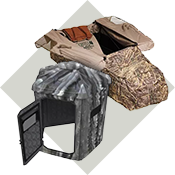
The core foundation of this accessible setup relies on two key items: a Scheels Outfitters layout blind and two dozen Higdon Silhouettes. With this simple combination, you can haul all your gear in a single trip, set up your spread in minutes, and focus on the hunt.
Once you have your budget-friendly gear prepped and ready, the next step is locating the birds and planning your timing.
Scouting and Timing: Location, Wind, and Schedule
Arriving at your field with plenty of time is critical to avoid rushing your setup. Follow these timing rules based on when you plan to hunt:
-
Morning Hunts: Arrive two hours before legal shooting time to allow ample time to conceal your blind and set up your spread.
-
Evening Hunts: Arrive three hours before you expect the birds to start flying.
Wind direction is the single most important weather factor when placing your spread. Geese prefer to land directly into the wind, so you must set up your spread with the wind at your back.
Expert Tip: Before setting out, check a weather app to monitor predicted wind shifts. Staying aware of changing wind directions ensures your spread remains aligned throughout the hunt.
Layout Blind Placement
The hide dictates how well your hunt goes. If your hunt goes poorly, a weak hide is almost always the main culprit. Taking the time to properly conceal your layout blind is the most vital step of field hunting.
Hide Checklist
-
Use local field material: Gather natural straw, wheat, or corn stubble directly from the specific field you are hunting.
-
Cover the entire blind: Insert stubble through every stubble strap along the full length and back of your Scheels Outfitters layout blind.
-
Pay attention to detail: Take all the time needed to ensure your blind completely matches the surrounding ground, this step should not be rushed.
-
Utilize natural cover: Position your blind in areas where the stubble was cut a little bit higher to help break up the outline of your blind.
-
Position for close shots: Place your blind in front of or inside your rear family cluster of decoys.
Placing Your Blind
Positioning your blind directly in front of or within your rear family cluster of decoys is a critical tactical decision. Placing your blind ahead of the rear decoy group pulls landing birds right over your location, giving you close, high-accuracy shots. With a well-concealed layout blind in place, you can turn your attention to building an enticing decoy spread.
Setting the Goose Decoy Spread
In the early season, geese fly in small family groups of 6-10 birds rather than the massive flocks seen late in the year. Arranging your decoys to mimic these natural family clusters creates an inviting and realistic scene for incoming birds.
Related Expert Content: Early-Season Canada Goose Hunting Tips
Setting your silhouette decoys in small family groups arranged in a general U-shape creates an open landing zone, known as the kill hole. Extending decoy arms out to each side guides landing geese directly into close shooting range.
?fmt=auto)
Key Silhouette Decoy Placement Tips
-
Keep Them Level: Ensure every decoy sits flat and level in the ground, rather than tilted forward on its nose or leaning backward on its heels.
-
Vary the Angles: Point silhouette decoys in multiple directions - varying their angles ensures circling geese always see a full profile no matter where they are overhead.
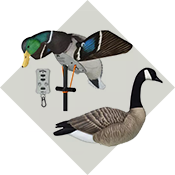
Expert Tip: To add realistic depth to your setup, consider adding stackable 3D shell decoys, which offer added dimension while maintaining space-saving efficiency.
Once you are ready to expand from silhouettes and shell decoys, you can learn how to set up a more complex version of a goose decoy spread with your new materials. Another way to expand your setup is to incorporate motion decoys into your spread.
Ready to gear up for your next field hunt? Visit your local SCHEELS store to complete your hunting setup with ammunition and a shotgun, or connect with a Waterfowl Expert for hunting tips and top quality field gear.

About our Experts
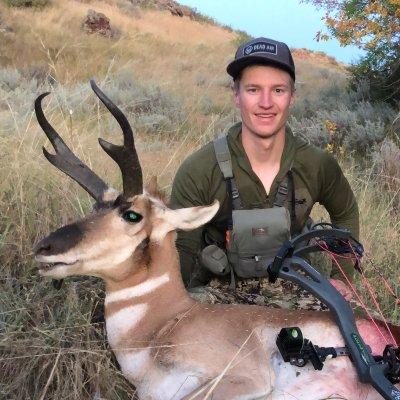
Kordell is a Hunting Expert at SCHEELS Bismarck, specializing in waterfowl and upland game. With hands-on experience and a passion for the outdoors, he helps hunters gear up, plan strategies, and make the most of every hunt.